+44(0)161 724 0357 info@sewardrl.co.uk
Meat Packaging Facility

Meat Packaging Facility

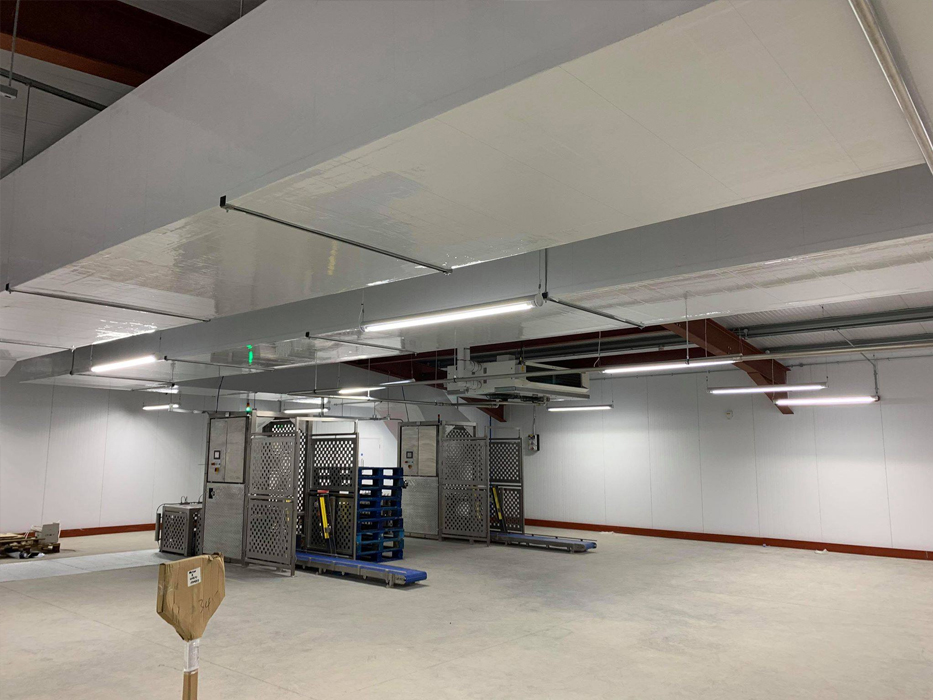
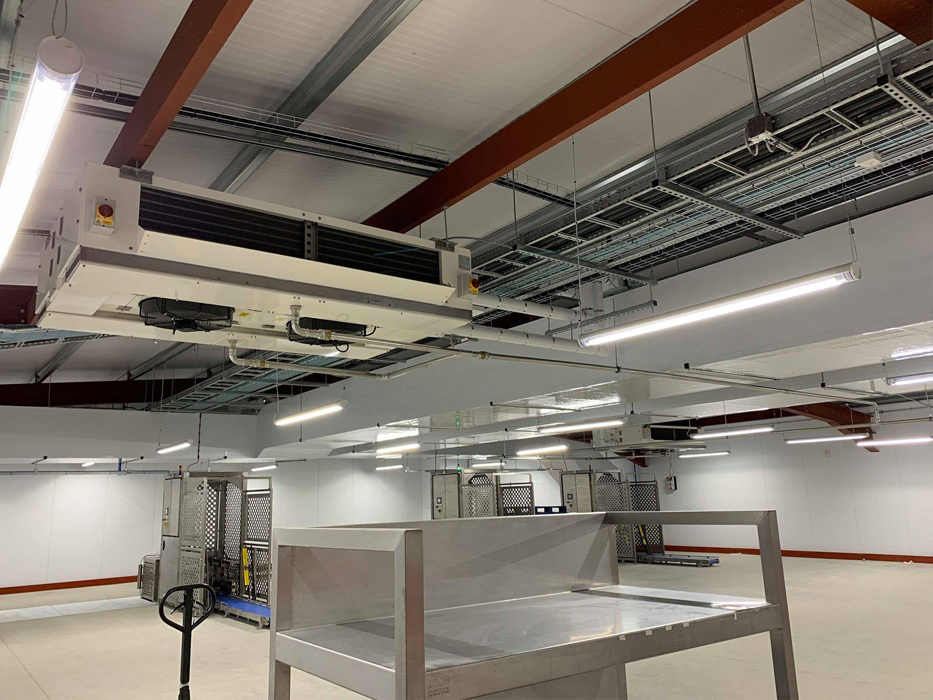
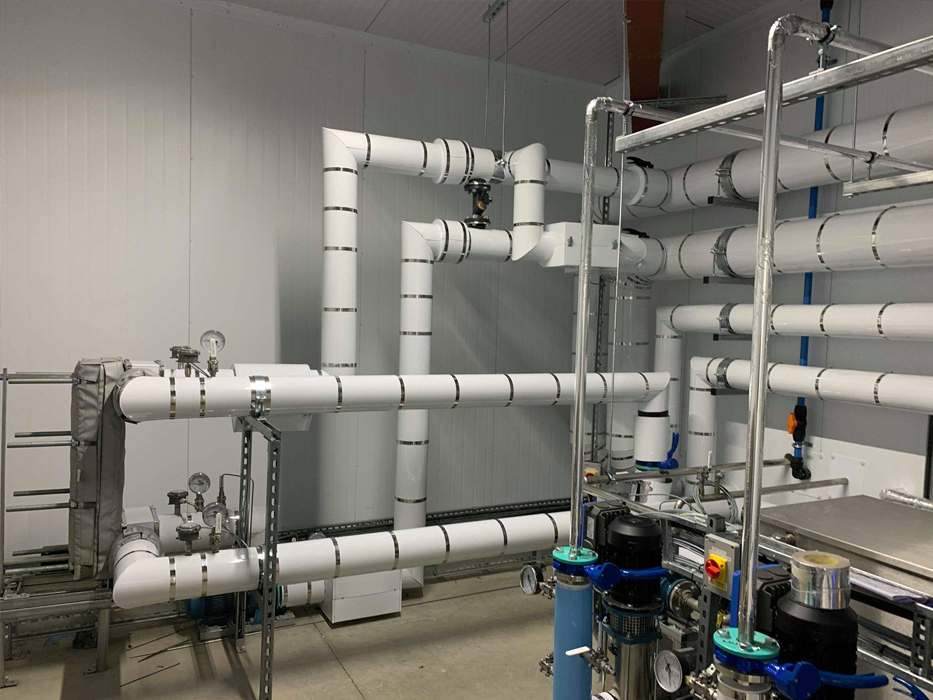
Ammonia / Glycol Heat Pump – Meat packaging facility
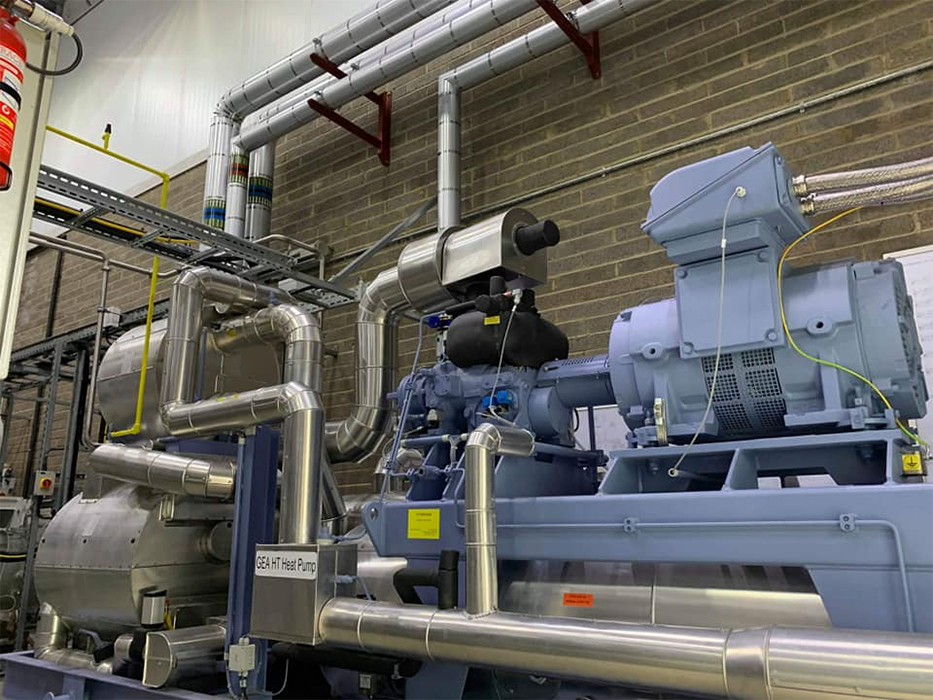
Our client operates a meat packing facility and we were awarded the installation contract in 2014 to install a central ammonia / glycol system. During the summer of 2019 we were then awarded the installation contract to install and fully commission a brand new ammonia / glycol heat pump system, providing cooling for a factory extension, whilst heating 150m3 of mains water up to +65°c for sites wash down periods.

We proposed and installed a Grasso RedAstrum, low charge ammonia, packaged glycol chiller including high pressure screw compressor, equipped with an inverter driven 280kw motor. The pack provides 603kw of heating and 390kw of cooling capacity, supplying mono propylene glycol at -2°c / +2°c return on the cooling circuit. The package came complete with OMNI controller, which is networked back to the main refrigeration plant Trend SCADA system.

The -2°c / +2°c pressurised glycol cooling circuit is fed from a heat exchanger on the RedAstrum package, supplying mono propylene glycol at 25.3 L/s at 2.5 bar head (Run and standby pumps). The cooling circuit is linked to the existing central ammonia plants, high temperature (-2°c / +2°c return)  glycol circuit to provide the heat pump with continuous load when cooling in the new factory extension is either temperature satisfied, or surplus to requirements. The chilled glycol circuit feeds the following main plant items;

  • 2 x 181kw Lennox air handling units providing pressurised fresh air at +10°c for the new factory extension. Each requiring a flow rate of 11.68l/s (Glycol -2°c / +2°c return) Both AHU’s come complete with integral glycol heating coils.
  • 3 off glycol, low velocity, dual discharge evaporators above a mezzanine area providing conditioned air at +18°c.
  • 1 off glycol buffer tank (Pressurised)
  • 1 x temperation loop / pumping station supplying glycol at 5.6L/s onto a plate heat exchanger. The chilled water secondary side of the heat exchanger serves a buffer tank, complete with integral weir plate (Warm / cold sides). Chilled water at +5°c is supplied from three pumps (cold side) each supplying chilled water at 1.24L/s at 5.0 bar head feeding packing machines and Vacuum pumps internally to three locations throughout the facility.

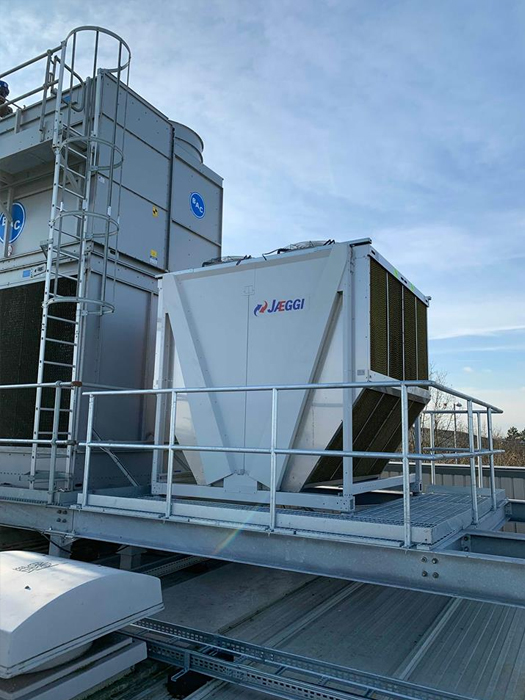
The heating circuit (Heat pump), consists of a pressurised primary glycol circuit, including Run and standby pumps, supplying glycol at +70°c / +40°c return at 5.25L/s, a large buffer vessel, and 1 x plate heat exchanger. If heating on the secondary water side of the circuit is surplus to requirements or temperature satisfied, a three port diverting valve, diverts the hot glycol fluid to a 615kw JAEGGI Hybrid Blue adiabatic cooler to reject the heat.The integral PLC control monitors the fluid outlet temperature and ambient conditions. From the collected information, the optimum combination of water feed rate and fan speed are determined and controlled. The performance is assured by the integral PLC control system and variable speed fans, with each operating point being determined individually with only the necessary amount of pre-cooling water used, thus operating costs are kept to a minimum.

The secondary heating circuit (Mains water) fed from the glycol heat exchanger consists of a large buffer tank providing 150m3 of water at +65°c. The hot water generated from the heat pump provides the factory with heated water for wash down periods. This efficient process not only provides adequate cooling capacity for the new extension, it has provided significant energy savings over our customers conventional boiler system, which is still in situ for standby purposes only.

Another advantage of the system we installed is after the wash down period. Whilst the factory take advantage of the heat generated from the heat pump for their wash down, when this process has been completed the air handling units are programmed to dry out the area. This is achieved via a detailed control strategy, both cooling and heating the space via the AHU’s cooling & heating coils, drying the area out very quickly.

All new control panels were fitted with Trend controllers and HMI screens networked back to the main Trend SCADA system. The system is accessible from our offices for monitoring and fault-finding purposes.

2500kw Ammonia / Glycol plant

2500kw Ammonia / Glycol plant

2500kw Ammonia / Glycol plant

Our client made the decision to replace their central ammonia system in 2017 and Seward Refrigeration Ltd were invited to present our company and were interviewed by sites project management team. Seward Refrigeration were successful and made the tender list for the new installation project, taking our design and sales team approximately 4 months to complete a number of variations and options in line with the tender specification document.

Seward Refrigeration were then selected as the chosen refrigeration contractor for the new installation project, following a further two months of variations and options. Due to our clients budget, many plant items were removed from the original scope of works, including standby HT compressors, automatic ammonia purging system, additional low temperature glycol circuit and additional evaporative condenser to name a few.

Reducing energy consumption is always our primary objective, and our first choice will always be natural refrigerants for any new installation project. Using Ammonia as the primary refrigerant for a project of this stature was always going to be our first choice. Ammonia has no effect on global warming, is efficient, cost effective and green, a perfect option as we move forward into the future.

The refrigeration system we proposed and installed was a 2500kw two stage ammonia / glycol system (Coolflow DTX), which would be installed over two phases. The low stage feeds direct pumped ammonia to a cold store, with the high stage feeding a gravity fed intercooler vessel / plate heat exchangers, evaporating at -16.5ºc, supplying glycol at -15ºc.

The low stage plant consists of two inverter driven Grasso V300 reciprocating compressors (Run and standby) and LT pumped surge vessel (Run and standby pumps), feeding two ceiling mounted draw through evaporators in a cold store, operating at -20 degrees c. The high stage plant consists of two inverter driven, Grasso SP1 screw compressors, a gravity fed intercooler vessel complete with 3 x plate heat exchangers, 1 x evaporative condenser, HP float and 3 x inverter driven KSB glycol pumps (2 x run, 1 x standby). The cold glycol circuit feeds two AHU’s, evaporators in holding chill & production areas, a large despatch chill, all operating between +2/+5 degrees c, including blast chillers. In total there were 45 evaporators installed and all manufactured by Coolers & Condensers. All coolers feeding chilled areas were installed with EC fans, providing energy savings during low load conditions.  

To reject the total THR of the compressors, we installed a BAC evaporative condenser, condensing at +32 degrees c / +21.5 degrees c wet bulb. The condenser was  equipped with fan speed inverters, wet bulb sensor and electronic control system that automatically floats the discharge pressure dependant on the ambient wet bulb temperature and discharge pressure. This technique ensures that the HT compressors in operation will absorb the minimum amount of power throughout the fluctuating range of the discharge pressure. The condenser was coated with a Baltibond hybrid coating for protection against a harsh costal environment, and fitted with an access ladder and walkway to facilitate access to the eliminators and spray nozzles for cleaning. Motor davits were also installed for the ease of removing fan motors, if required in the future. The condenser also came equipped with a split cooling circuit for compressor oil cooling via an independent glycol circuit.

The defrosting method for all glycol coolers is achieved via a warm glycol ring main, consisting of two inverter driven, suction flooded KSB glycol pumps, (Run and standby) reclaiming free heat from a discharge line partial desuperheater / condenser. The warm glycol circuit is controlled at a setpoint of +20 degrees c via a modulating three port valve, providing a very efficient defrosting process. Both cold store evaporators are defrosted via hot gas supplied by the main discharge line fed from the two HT screw compressors.

The refrigeration duty for the 1st phase totals 1700kw, with a further 800kw accounted for in the design to cater for future cooling capacity. To provide the future cooling duty, an additional HT screw compressor, evaporative condenser, HP float and cold glycol pump will be required, taking the total plant duty to 2500kw.

The four Grasso compressors are all controlled via independent OMNI controllers, controlled in sequence, and all parameters are networked to the main system PLC, providing historical data and graphs for monitoring purposes. To control and monitor the plant we installed an RDM PLC, complete with Data manager. All roof void control panels, controlling the glycol evaporators each have independent HMI screens and all RDM TDB controllers are networked back to the central RDM Data manger in the switch room. An RDM 3G modem was installed allowing our staff to monitor the system remotely if required and from our offices we can check set points, reset alarms and determine if a service call is required.

We installed a TQ leak detection system for the plant room and Coldstore, four ATEX rated extract fans, each inverter controlled, and extract hoods above each cold store ammonia valve station. A ventilation system supplies ambient fresh air in the plant room and a pressurised ventilation system / split air conditioning system was installed for the switch room.

To conclude, there was over 4500 meters of pipework installed and the installation project took 14 months to complete. Each evaporator fed from the pumped ammonia / glycol circuits was introduced to the system one by one, whilst working around sites live production facility. Seward Refrigeration offered our client the best compromise, between capital investment, running costs, maintenance and environmental impact with the new low charge ammonia / secondary glycol system. Our customer was pleased to have their existing, high charged ammonia plant finally replaced. Not only has the new system provided our client with peace of mind, they’re delighted with the performance, in particular with the blast chills achieving ideal core temperatures in 2-3 hrs (dependant on product type), surpassing the performance of the existing blast chillers.

Ammonia/Glycol plant – Factory Extension

Ammonia/Glycol plant – Factory Extension

Ammonia/Glycol plant – Factory Extension

Seward Refrigeration Ltd were awarded the installation contract, to supply, install and commission a brand new ammonia/glycol system for a factory extension in the Midlands. The plant provides 690kw providing glycol at -10°c/-5°c feeding evaporators in a large blast chiller, despatch area, chill area, chill stores and two air handling units in high care/low care areas. Evaporator defrosting is achieved via a warm glycol circuit, recovering free heat from a Vahterus desuperheater installed on the discharge line of the Sabroe twin pac.

Installed was an ammonia/glycol, Sabroe twin pac, comprising of 2 x Inverter driven SMC 108LV reciprocating compressors. The pack provides a duty of 670kw, glycol off -10°c, glycol on -5°c, condensing @ +32°c / +21°c wet bulb. To reject the compressor(s) THR we installed a Baltimore VXC condenser, including inverter driven fan motor, controlled on discharge pressure.

The plant is controlled by an RDM plc, including 3G modem allowing our engineers and staff to dial in remotely if any fault alarms are raised. All compressor motors, blast chill evaporator fans and condenser fan are driven by Danfoss FC103 Inverter drives reducing power consumption during low load conditions. The control strategy for the system was designed and programmed in house.

Ammonia plant – Canada

Ammonia plant – Canada

Ammonia plant – Canada

Seward Refrigeration Ltd designed, project managed and commissioned, the installation of a new pumped ammonia plant feeding a spiral freezer and transfer tunnel for a blue chip food processing manufacturer in Canada.

The spiral freezer is designed to freeze five metric tonnes of product per hour, with the product entering the spiral freezer at +90°C and is frozen down to -18°C. The spiral freezer is designed to operate continuously for a 21 day period and to achieve this there are five sequential defrosting ammonia evaporators each with a duty of 418 kW, operating with pumped ammonia at -32°C. Four of the coils are continually in use with the fifth coil defrosting with hot gas.

A split surge drum will provide -32/-5°C ammonia. Connected to the -32°C dry suction line, are two Mycom open flash economised screw compressors each operating at 3600 RPM and directly driven by 530 kW, 4100 volt high-efficiency inverter operated motors. The -5°C surge drum section offers liquid sub cooling and connection onto the new retrograde product drier and 0°C transfer tunnel. The compressor on this section is A Mycom screw compressor operating at 3600 RPM and directly driven by a 350 kW, 4100 volt high-efficiency inverter operated motor.

A high-efficiency condenser suitable for operation in the extreme winter conditions of Canada has been installed with a remote sump and condenser pump fitted within the compressor plantroom.

Poultry Factory – New Ammonia plant

Poultry Factory – New Ammonia plant

Poultry Factory – New Ammonia plant

A UK based company specialising in the production, processing, and supply of chilled poultry products awarded Seward Refrigeration Ltd the installation contract to install a new 2400kw Ammonia/glycol system. The new plant feeds an inline blast chiller, production and despatch areas, including standby capacity for future expansion on the secondary glycol side.

The plant consists of 3 x Inverter driven Grasso V1400 reciprocating compressors, each equipped with 250 kW drive motors,  sequence control, floating head pressure control,  surge vessel/pumping station, Alfa Laval pumped ammonia/glycol plate heat exchanger, 30 x evaporators, electrical control panels and 1 x Inverter driven BAC evaporative condenser. Connections have been installed on the discharge line before the condenser to incorporate a future desuperheater via monopropylene glycol and additional plate heat exchanger to raise the temperature of process water.

12,000 birds per hour enter the inline blast chiller, sizes ranging from small, medium and large, with one million birds being processed per week. In total, twenty four evaporators sit directly on to the inline blast chill conveyor system support frame. The evaporators were specifically designed for the process, including fans pitched at 45 degrees and air intake hoods for improved air flow and defrosting (Hot gas). All evaporator fans are inverter controlled and the suction pressure is closely controlled, ensuring optimum product outlet temperatures and minimal product weight loss.

The Despatch area evaporators are fed from the pumped ammonia system, with all production area coolers being fed from the secondary glycol ring main. The plant room provided was tight and not ideal, however all plant working to design with future service and maintenance taken into consideration.

The plant is controlled and monitored by an RDM PLC, complete with 3G modem facility allowing Seward Refrigeration to monitor and control the plant from our offices as requested by the client. Any potential alarms are raised by email and text message informing our service department and sites engineering team.