+44(0)161 724 0357 info@sewardrl.co.uk
Ammonia compressor replacements – Dairy Factory

Ammonia compressor replacements – Dairy Factory

Ammonia compressor replacements – Dairy Factory

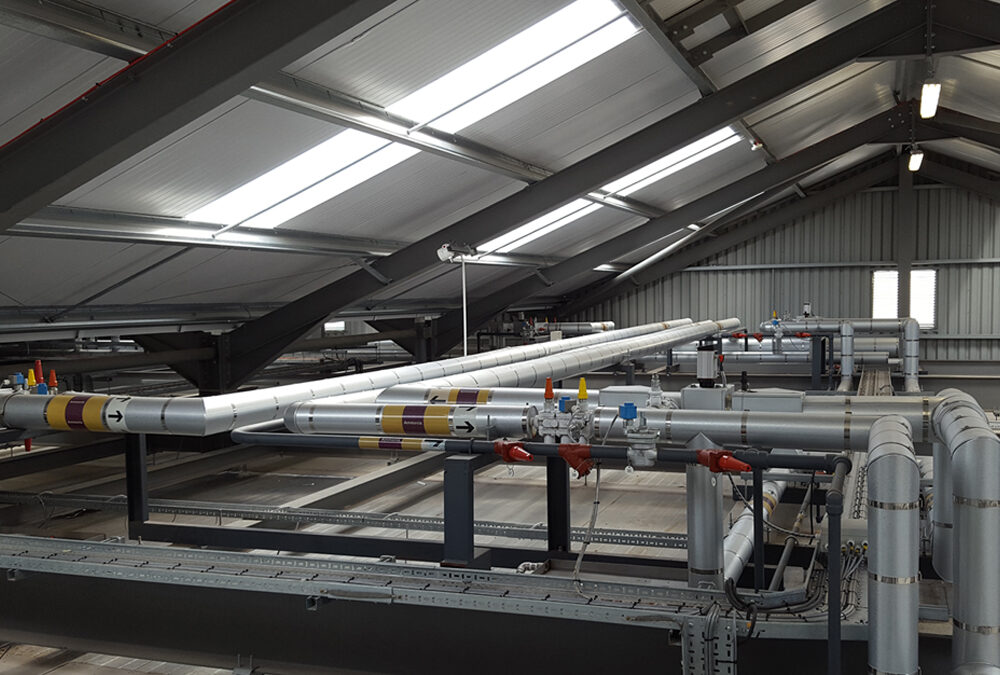
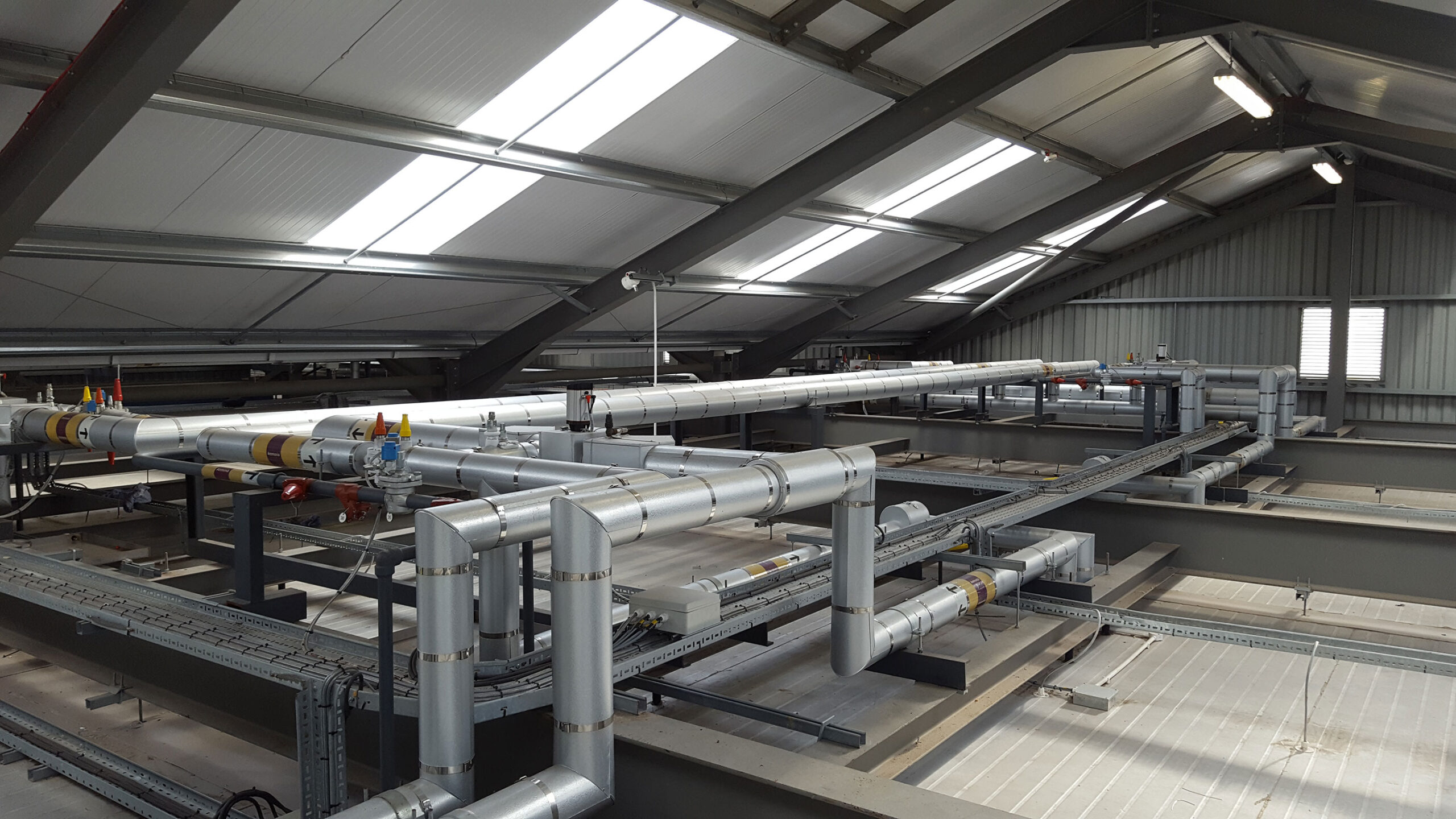
Our client is Britain’s largest producer of branded and private label dairy products, with a network of dairies and depots servicing customers throughout the country.

Our clients existing chilled water system at their production site in Shropshire, comprised of 4 x RC 911 Grasso compressors feeding 2-off gravity fed ammonia plate heat exchangers, each providing 1500 kW of chilled water with a flow temperature of +5°c. Changes to the system over the course of its life resulted in the plant having significant over capacity.

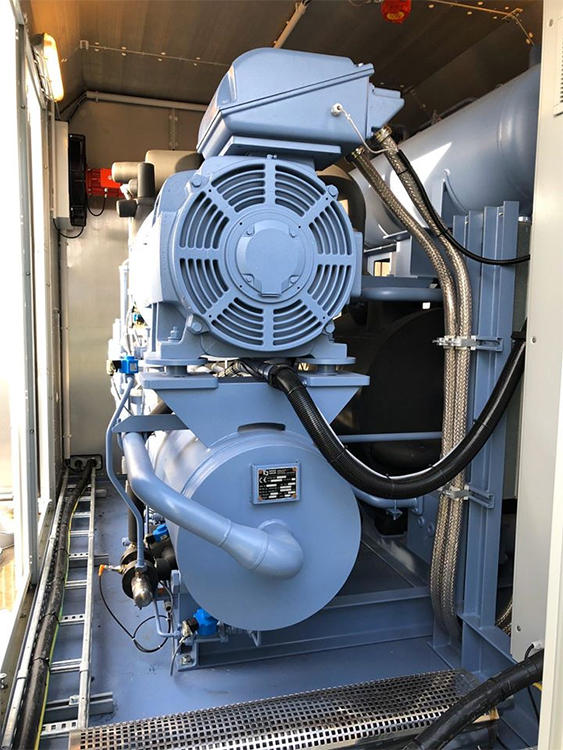
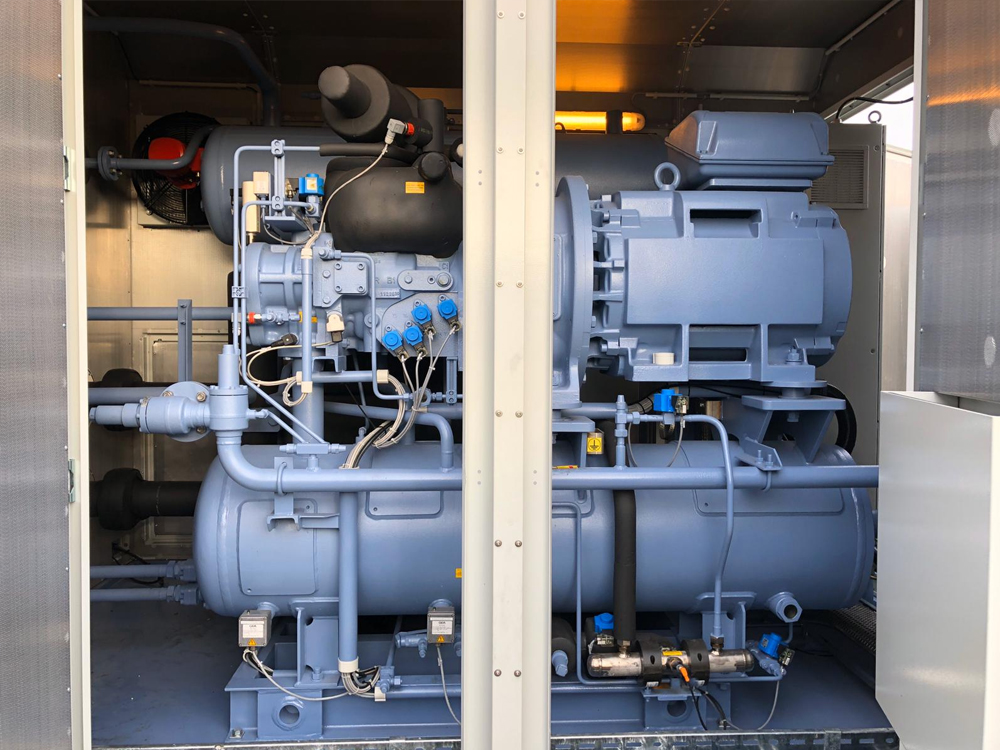
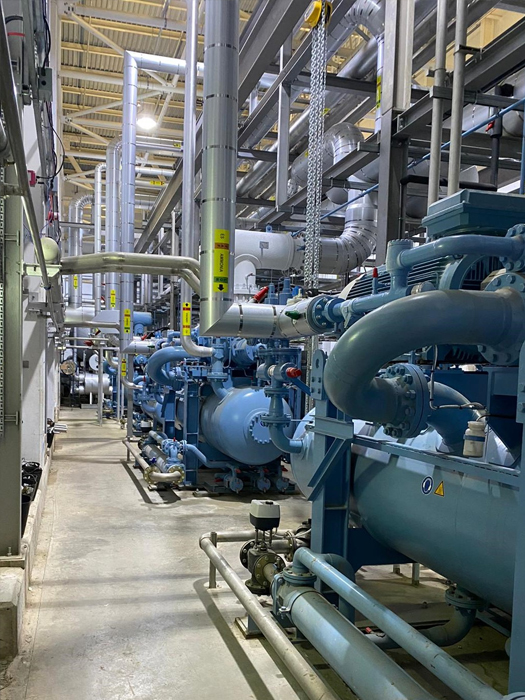
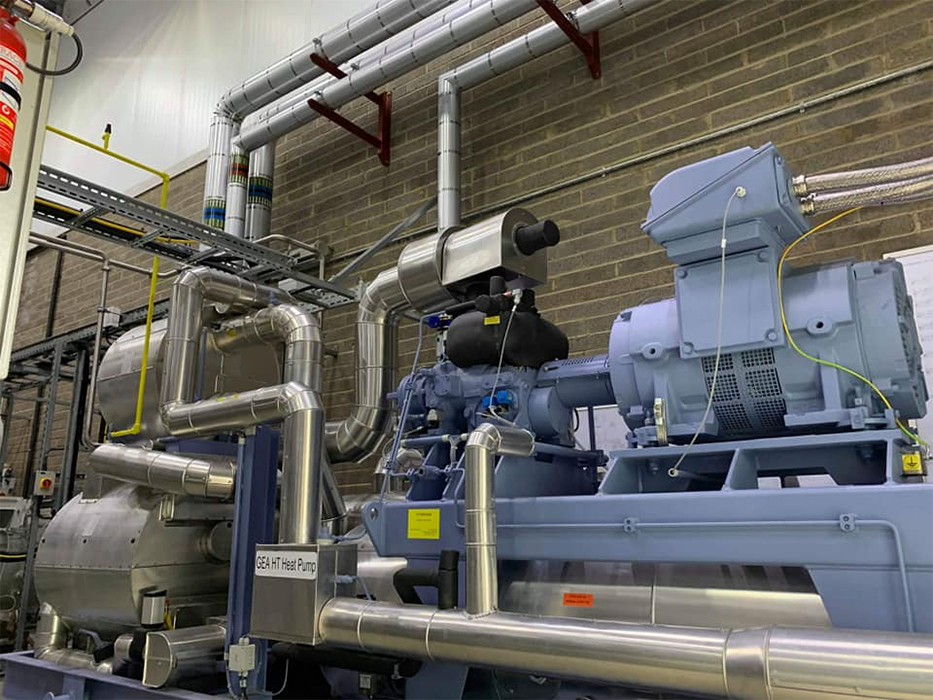
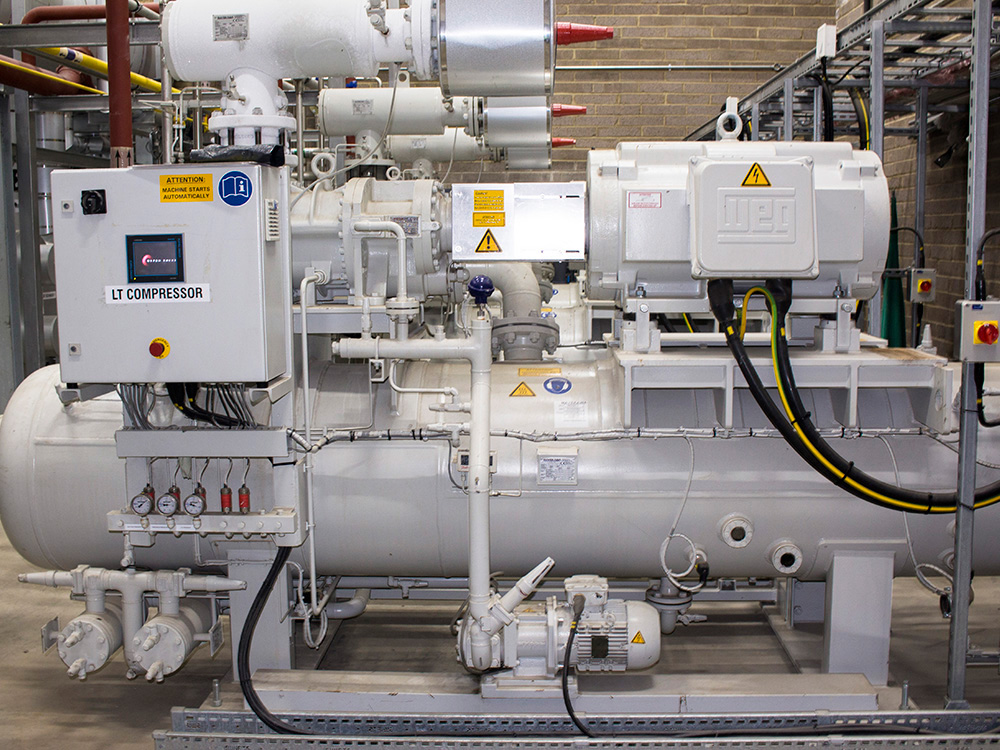
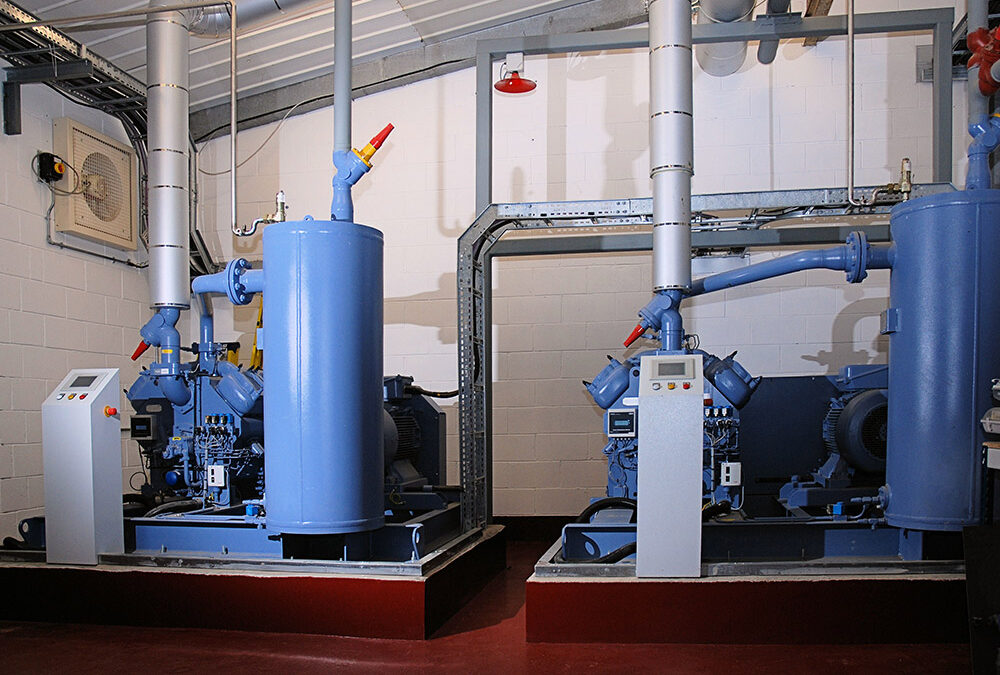
Seward Refrigeration Ltd were awarded the contract to replace the existing RC911 Compressor units 1 and 2 with 2-off fully independent Grasso M-Series inverter driven screw compressors, sited onto the existing compressor plinths. Each compressor provides 1158kw of duty, evaporating at +0.5 deg c, condensing +32 deg c. Each compressor comes complete with 200kw motor operating between 1,000 – 4,500 RPM, depending on load. The compressors have adapted variable internal volume ratio and continuous capacity control. With the two new compressors operational, the client’s requirement will be to use the two screw packs as lead compressors and the two remaining RC911 units as standby to facilitate future servicing of the screws or in the unlikely event of a screw pack failure.

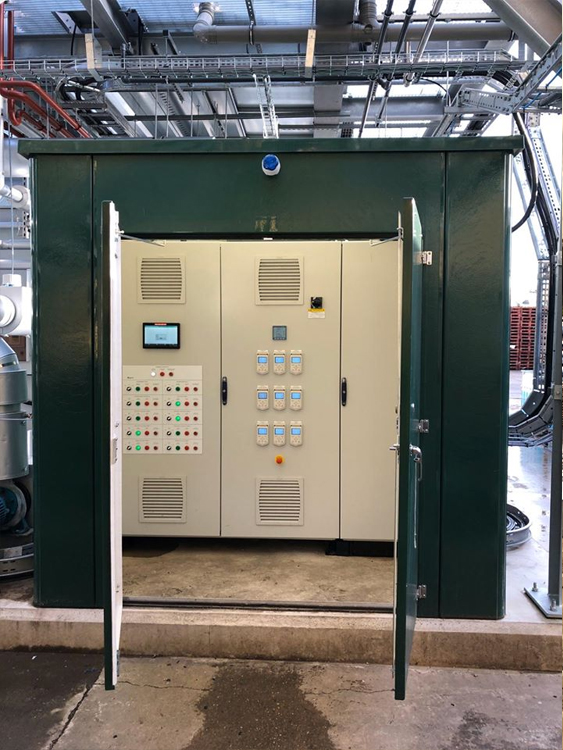
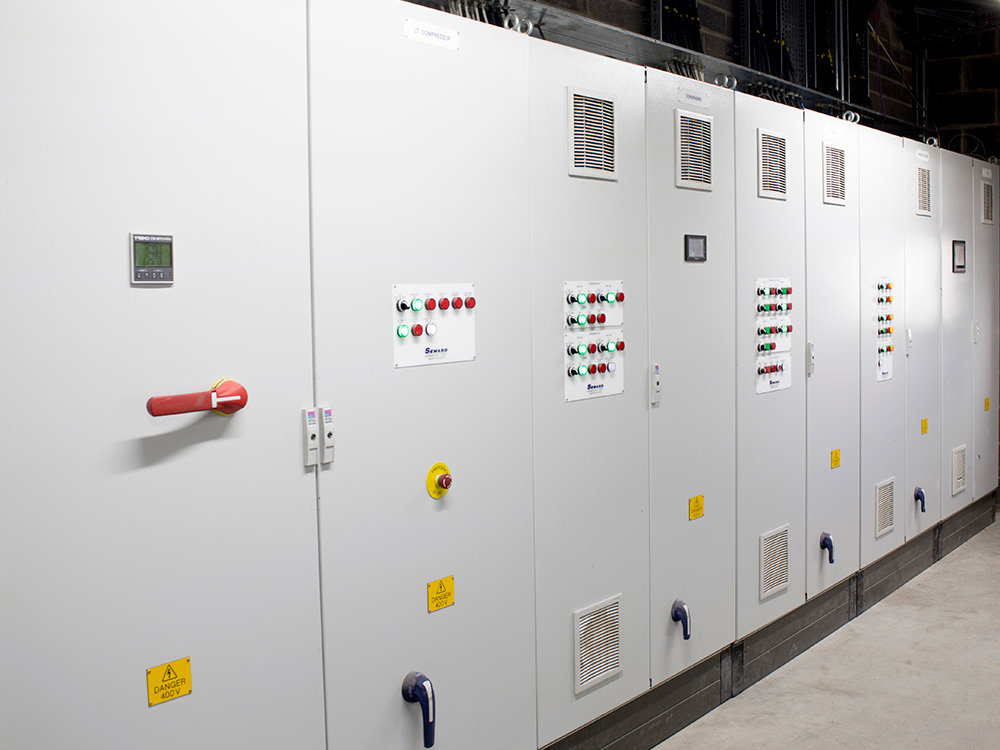
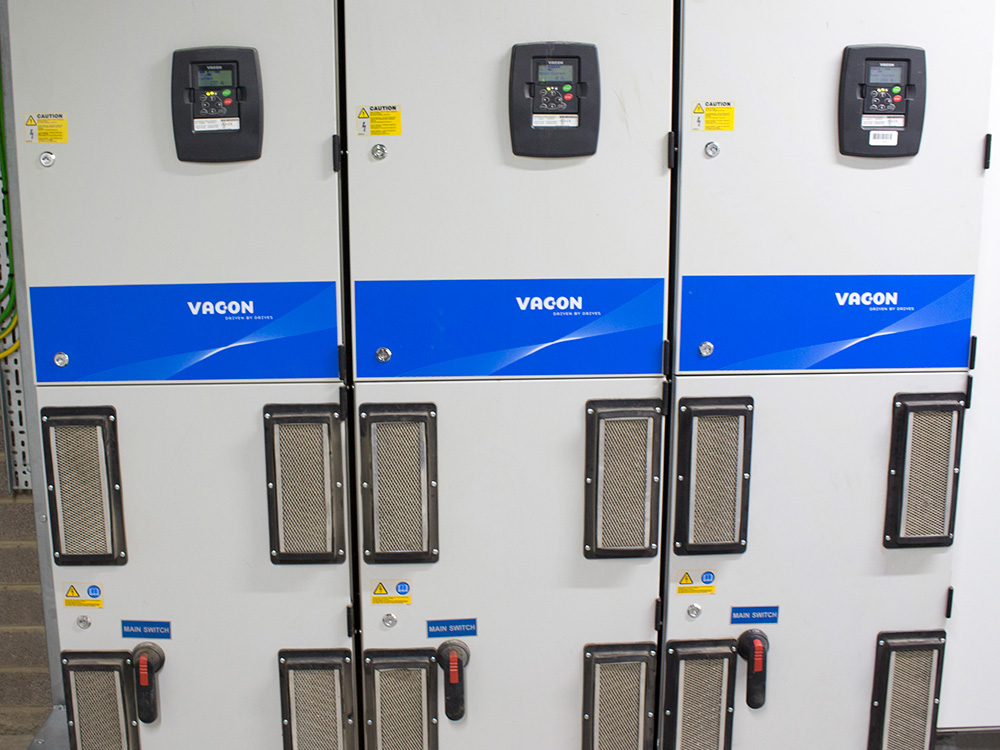
Both new Grasso M-Series screw compressors were installed complete with new starter panels and inverter drives. The suction temperature is controlled by an RDM PLC as requested by our client. The RDM starts, stops, loads and unloads the No1 & No2 screw compressors along with the standby reciprocating machines.

Ammonia / Glycol plant – Seafood Factory

Ammonia / Glycol plant – Seafood Factory

Ammonia / Glycol plant – Seafood Factory

Our client is a leading supplier of chilled fish to the UK retail market and we were awarded the installation project to install a new Ammonia / Glycol system to serve evaporators, an air handling unit and various processes within the production facility.

The works involved included;

  • Upgrading the AHU in the prep area to provide cooling and pressurisation to the high care factory area to +8°C.  
  • Glycol evaporators were installed in a Despatch area to maintain a temperature of 0-2°C, including future connections for an evaporator in a loading bay.
  • Two Capcold HFC units removed and added onto the glycol system along with a falling film chiller and the facility to replace all of the existing HFC units by way of isolation valves fitted to the main glycol flow and return headers (Future).

Main plant items installed were as follows;

  • 2 x Outdoor ammonia glycol chillers, each providing 484kw, supplying chilled glycol at -7°c. Both packages come complete with 1 x inverter operated, Grasso high efficiency screw compressor.
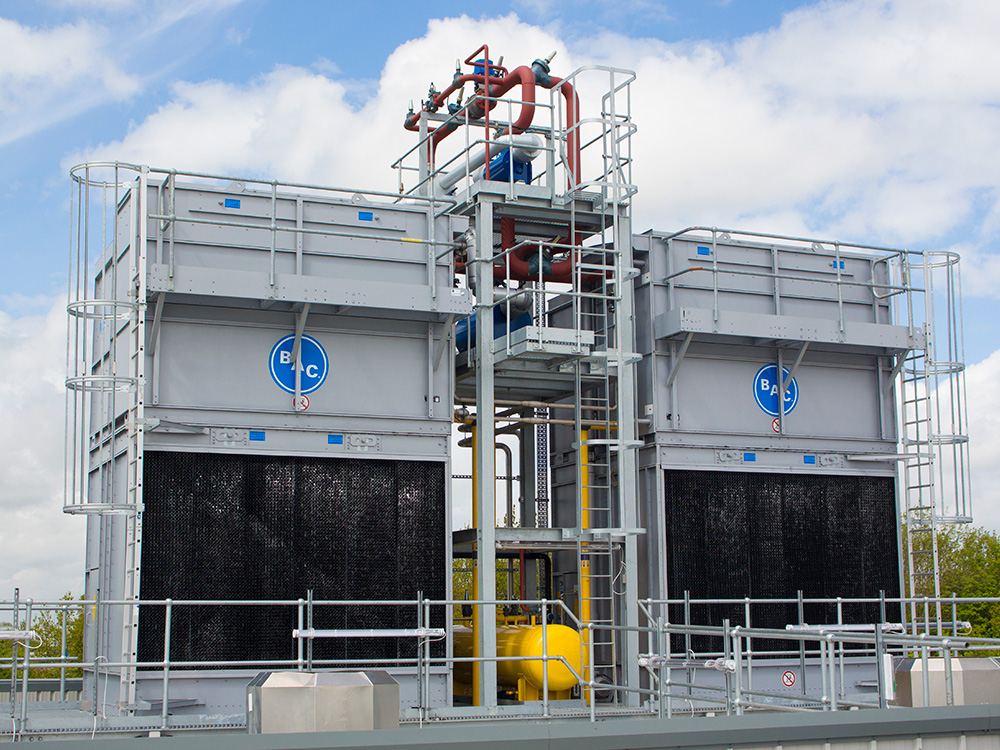
  • 1 x remote BAC CXVE evaporative condenser to reject the heat, including inverter driven fans, providing 1212kw, condensing at +32°c, +21°c wet bulb. 1 x split circuit for compressor oil cooling (Glycol).  
  • Cold glycol ring main, operating at -7°c.
  • Warm glycol ring main, reclaiming free heat for evaporator defrosting from the screw compressor oil cooling heat exchangers.
  • Inverter operated Run and standby cold and warm glycol pumps along with valve stations.
  • 1 x Inverter operated AHU for cooling and pressurisation to the high care prep area.
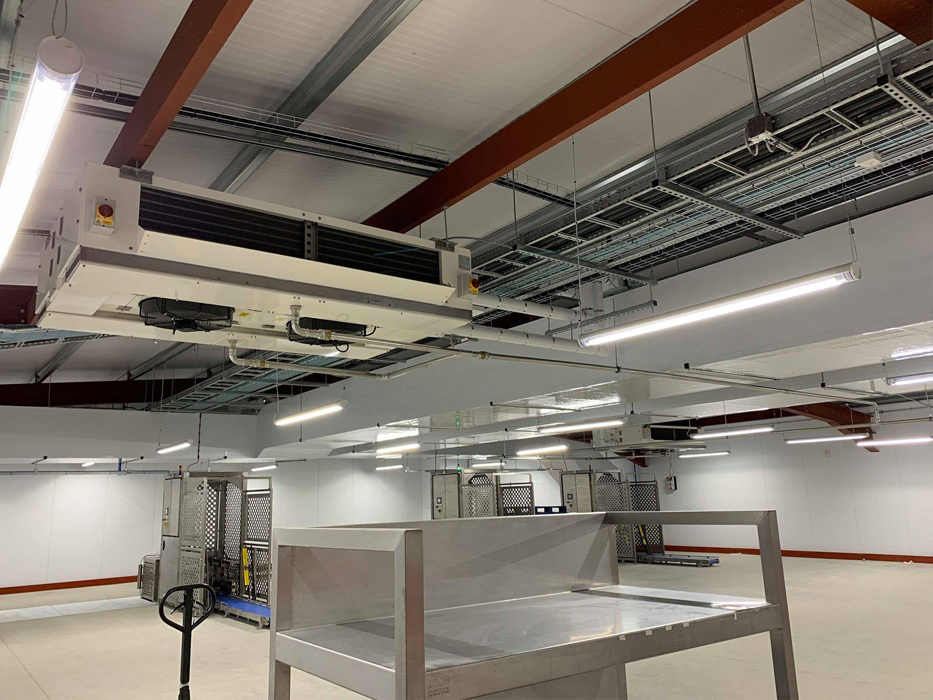
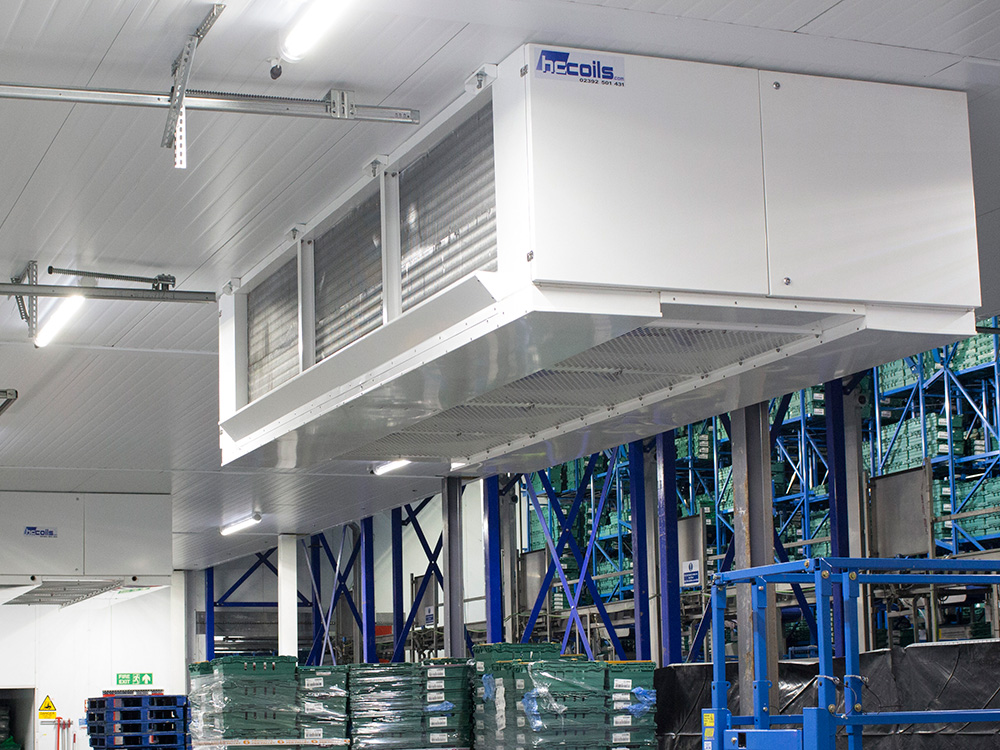
  • Ceiling mounted dual discharge evaporators, complete with EC fans for optimum energy savings.
  • Heat recovery for the factory to provide heated water fed from the warm glycol ring main.
  • Valves and connections to the Capcold units.
  • Valves and connections to the Falling Film Chiller.
  • Valves for future connections to replace HFC plant.
  • RDM PLC to control and monitor the plant
9800kw Ammonia / Glycol plant – new frozen potato production facility

9800kw Ammonia / Glycol plant – new frozen potato production facility

9800kw Ammonia / Glycol plant – new frozen potato production facility

Our client is the world’s largest manufacturer of frozen potato products and their existing production facility on England’s North Sea Coast was antiquated, and a major investment was necessary.

Seward Refrigeration Ltd were awarded the installation contract to install and commission a new multi-megawatt, standalone ammonia system to provide freezing and cooling duty for our customers new production facility.

The first phase of the project was to safely decommission the existing ammonia cold store refrigeration systems. Once the cold stores achieved ambient temperature the building work then commenced ready for the next phase of the project.

The scope of works for the new production facility included;

  • 2 x 18 ton/hour IQF tunnel freezers
  • 2 x IQF tunnel freezer refrigerated precooled sections.
  • 1 x chilled glycol circuit (Coolflow DTX) feeding the batter system, Cryolator, Chilled Water & glycol evaporators.
  • 1 x (ATL) Auto truck loading bay area (-18°C)
  • 1 x Cold store (-18°C)
  • 1 x 5 ton/hour spiral freezer (Future)
  • 1 x Weighing deck area (+5°C)
  • 1 x Manta deck area (+5°C)
  • 1 x Coldstore outlet area (+5°C)

The design of the new plant installed caters for 4 x independent temperature zones based on;

  • No1 18 tonne tunnel freezer – Operating between -28/-32°C SST (Total duty 2440 kW) Including sequential hot gas defrost load. (Two single stage economised ammonia screw compressors)
  • No2 18 tonne tunnel freezer – Operating between -28/-32°C SST (Total duty 2440 Kw) Including sequential hot gas defrost load. (Two single stage economised ammonia screw compressors)
  • Coldstore, ATL despatch bay and future roast product spiral freezer system – Operating between -28/-32°C SST. (total duty 945 kW) including defrost load. (One single stage economised ammonia screw compressor)
  • Glycol system required for the batter cooling, weighing deck area, Manta room and Freezer outlet area – Operating at -11°C SST. (Total duty 850 kW) One single stage ammonia screw compressor.
  • High temperature system required for liquid subcooling, No1 & 2 IQF tunnel freezer refrigerated precooled sections, sequential hot gas defrost load – Operating at -1°C SST. (Total duty 3062 kW) One single stage ammonia screw compressor.

Total plant duty – 9,737kw

The main plant items installed for the new refrigeration system, included;

  • 5 x Mycom N280JL-VE economised screw compressors packs, inverter operated.
  • 1 x Mycom N280JL-V screw compressor, inverter operated.
  • 1 x Mycom N220JM-V screw compressor, inverter operated.
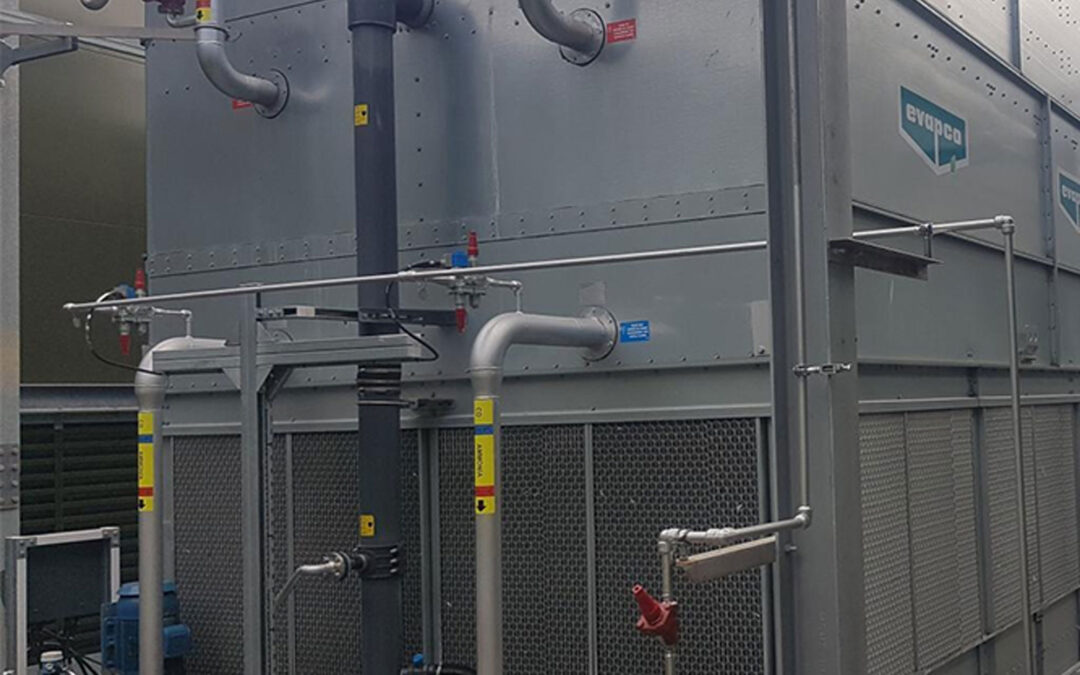
  • 5 x Evapco ATC-935E high efficiency silent mode induced draft condensers. Wet bulb temperature +21°c, condensing temperature +30°c.
  • 1 x Evapco EWSA-144-24J closed circuit glycol cooling tower for the screw compressors oil cooling system.
  • 1 x closed flash flooded ammonia shell and tube economiser installed within the -1°C liquid ammonia supply line from the -1°C surge drum to the -32°C surge drum(s).
  • 2 x IQF freezer, -32°C packaged surge drums, each complete with three inverter driven HRP liquid pumps, isolation valves, motorised fail safe pump suction down leg ball valve, DPRV, stand pipe, oil recovery vessel, high level cut-out switch, DPRV, level probe and isolation valves.
  • 1 x satellite cold storage -32°C packaged surge drum complete with three inverter driven HRP liquid pumps, isolation valves, motorised fail safe pump suction down leg ball valve, DPRV, stand pipe, oil recovery vessel, high level cutout switch, DPRV, level probe and isolation valves.
  • 1 x high temperature -1°C packaged surge drum complete with three inverter driven HRP liquid pumps, isolation valves, motorised fail safe pump suction down leg ball valve, DPRV, stand pipe, oil recovery vessel, high level cutout switch, DPRV, level probe and isolation valves.
  • 5 x Witt HR4 high side floats, installed to the underside of the condensers platform at high level.
  • 4 x ceiling mounted, wide fin ammonia evaporators for the new ATL dispatch bay, operating at -18°C.
  • 3 x ceiling mounted Coldstore evaporators, operating at -18°C.
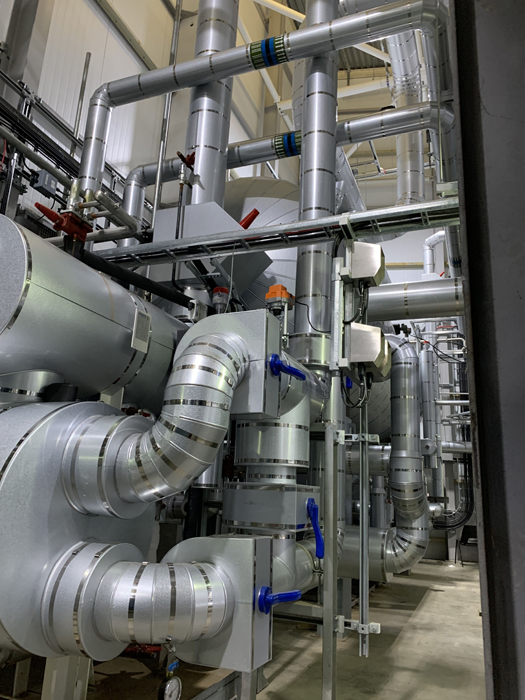
  • 1 x flooded Vahterus plate in shell ammonia/ glycol heat exchanger, supplying chilled glycol to the Cryolator, potable water skid, weighing deck area evaporators, Manta operating room and Freezer outlet area coolers.
  • Each of the two chilled glycol systems was installed with remote vertical type 304 stainless steel glycol buffer tanks complete with run and standby glycol pumps / valve stations.
  • 4 x ceiling mounted coolers feeding the weighing deck area. (Coolflow DTX)
  • 2 x ceiling mounted coolers feeding the Manta area. (Coolflow DTX)
  • 2 x ceiling mounted coolers feeding the Freezer outlet area. (Coolflow DTX)

Production equipment details

New IQF Tunnel Freezer No1 – The new tunnel freezer was designed for an operating ammonia temperature of -28/-32°C, providing a total duty of 2159 kW, and fitted with seven double mounted top feed bottom outlet connected coils. All of the coolers receive pumped ammonia from the new surge drum at -32°C with a pumping ratio at 5:1. The valve stations were installed within the access passageway between the two freezers, including extract ventilation.

New IQF Tunnel Freezer No1 Refrigerated Precooled Section – The new tunnel freezer precooled section is designed for an operating ammonia temperature of -1°C, providing a total duty of 925 kW and fitted with one double mounted top feed, bottom outlet connected stainless steel coolers. The coolers receive pumped ammonia from the new surge drum at -1°C with a pumping ratio at 5:1. The valve stations were installed within the access passageway between the two freezers, including extract ventilation.

New IQF Tunnel Freezer No2 – The new tunnel freezer was designed for an operating ammonia temperature of -28/-32°C, providing a total duty of 2159 kW, and fitted with seven double mounted top feed bottom outlet connected coils. All of the coolers receive pumped ammonia from the new surge drum at -32°C with a pumping ratio at 5:1. The valve stations were installed within the access passageway between the two freezers, including extract ventilation. To provide the duty, two Mycom single stage, economised ammonia screw compressors were installed operating between -28/-32°C (Total duty 2440 kW) Including sequential hot gas defrost load)

New IQF Tunnel Freezer No2 Refrigerated Precooled Section – The new tunnel freezer precooled section is designed for an operating ammonia temperature of -1°C, providing a total duty of 925 kW and fitted with one double mounted top feed, bottom outlet connected stainless steel coolers. The coolers receive pumped ammonia from the new surge drum at -1°C with a pumping ratio at 5:1. The valve stations were installed within the access passageway between the two freezers, including extract ventilation.

Coldstore – Three 134kw ceiling mounted, hot gas defrosting evaporators were installed in part of the old existing cold store, selected based on an high infiltration load and minimum fin spacing at 10 mm providing -18°C operating temperature.

ATL Dispatch Bay – Four 60kw ceiling mounted, hot gas defrosting coolers were installed for the new Auto Truck Loading Bay, selected based on an high infiltration load and minimum fin spacing at 10 mm providing -18°C operating temperature.

Batter Chilling and Glycol Air Coolers – One 850kw flooded Vahterus plate in shell ammonia/ CoolFlow DTX glycol heat exchanger, supplying chilled glycol to the Cryolator, potable water skid, weighing deck area evaporators, Manta operating room and Freezer outlet area coolers. The Vahterus heat exchanger is fitted with a twin system that incorporates two plates into one common shell operating on the flooded principle with ammonia evaporating at -11°C. The 0°C secondary glycol side provides a duty of 620 kW and the -6°C side provides a duty of 180 kW

Both glycol systems consisted of hot and cold side buffer tanks, vertical type with internal weir plate. The circuits include independent glycol pumps for the potable water heat exchanger, glycol coolers, recirculating pumps and valve stations.

Future – Roast Product Spiral Freezer – This will be a self-contained spiral freezer and will be connected onto the -32°C satellite packaged surge drum in the future.

Conclusion

To conclude the installation of the new refrigeration plant took just under two years to complete. The two new cold stores were commissioned first to allow product to be stored in dispatch at the required temperatures. Once the new system was partly commissioned the existing tunnel freezers were switched off individually and product was diverted to the new freezer tunnels.

When each of the new tunnel freezers were fully commissioned and in operation and the client was producing the required quantity of product, we then proceeded to decommission each of the existing tunnel freezers. In total including the existing cold stores, 29,000 KG of ammonia was safely removed from site, with the new refrigeration system being charged with 15,900Kg of ammonia in total.

The new refrigeration system is controlled via a state of the art SCADA system. Graphics and instrumentation (pressure and temperatures) are all visible on the screens which makes it ideal for site and our service engineers to diagnose issues with the system. The refrigeration plant is fully automated and requires little involvement from sites engineers to operate the system. Seward Refrigeration completed the control narrative and fully commissioned the new plant alongside software engineers.

Ammonia / Glycol plant upgrade

Ammonia / Glycol plant upgrade

Ammonia / Glycol plant upgrade

Our client is Britain’s largest producer of branded and private label dairy products, with a network of dairies and depots servicing customers throughout the country. Our clients site in Telford predominantly manufactures retail branded yogurt products, and made the decision to increase the site capacity from the current production capacity of 200 to 500 million pots per annum. This being achieved through upgrading and increasing existing production and storage capabilities.

The existing refrigeration system was designed to facilitate future expansion and the new additions / modifications provided a common ammonia / glycol system.

Seward Refrigeration Ltd were awarded the installation contract to upgrade the existing ammonia / glycol refrigeration system to serve the new project, including the installation of two heat pumps providing conditioned air in a high bay warehouse.

The scope of works included;

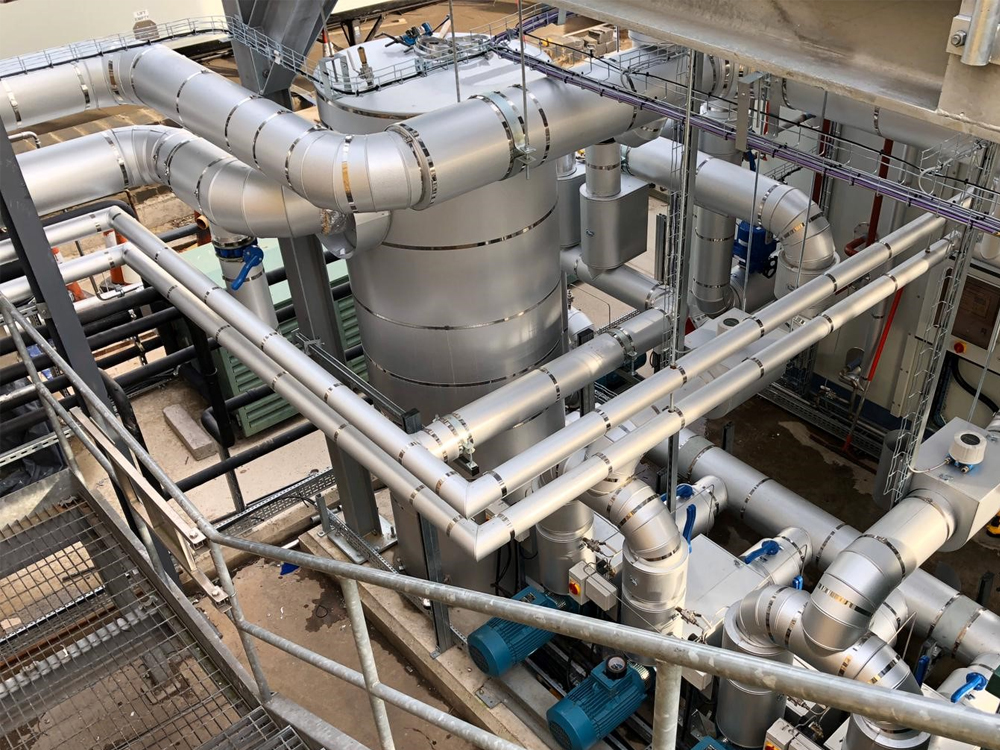
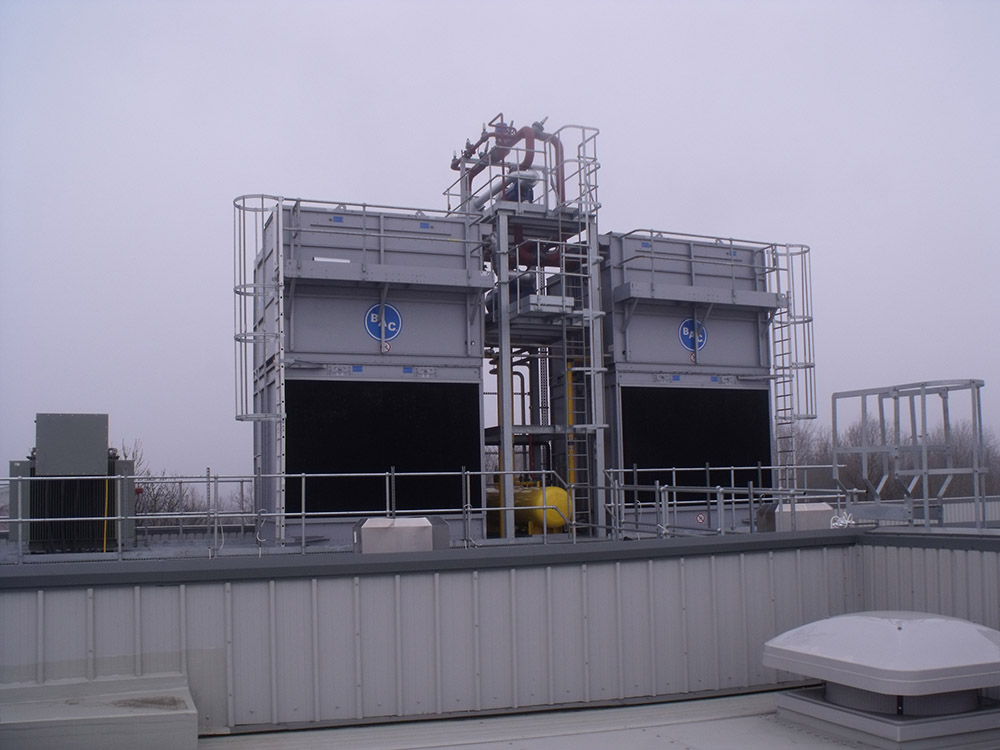
  • Installation of an additional BAC evaporative condenser, equipped with fan inverter drives, located adjacent to the existing unit.
  • Installation of a high-pressure liquid receiver installed at condenser level
  • The existing HP float removed and converted to high pressure liquid feed via modulating control valves supplied via the new liquid receiver.
  • An additional Grasso DUO compressor pack installed between the two existing Grasso RC compressors and piped into the common refrigeration circuit.
  • An additional 1200kw ammonia / glycol heat exchanger was added to the existing 2500kw surge vessel to provide cooling duty to the new cooling tunnel, despatch area and Repack area.
  • The interconnecting suction pipework between compressors and surge drums to operate at the same suction pressure
  • The existing Trend controls system was extended to facilitate the new equipment.
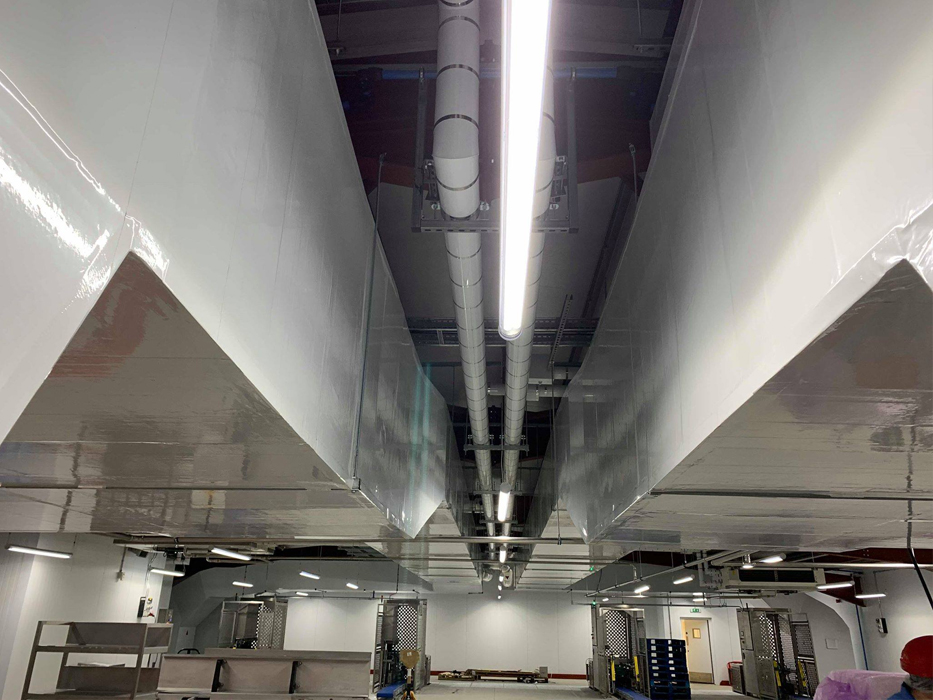
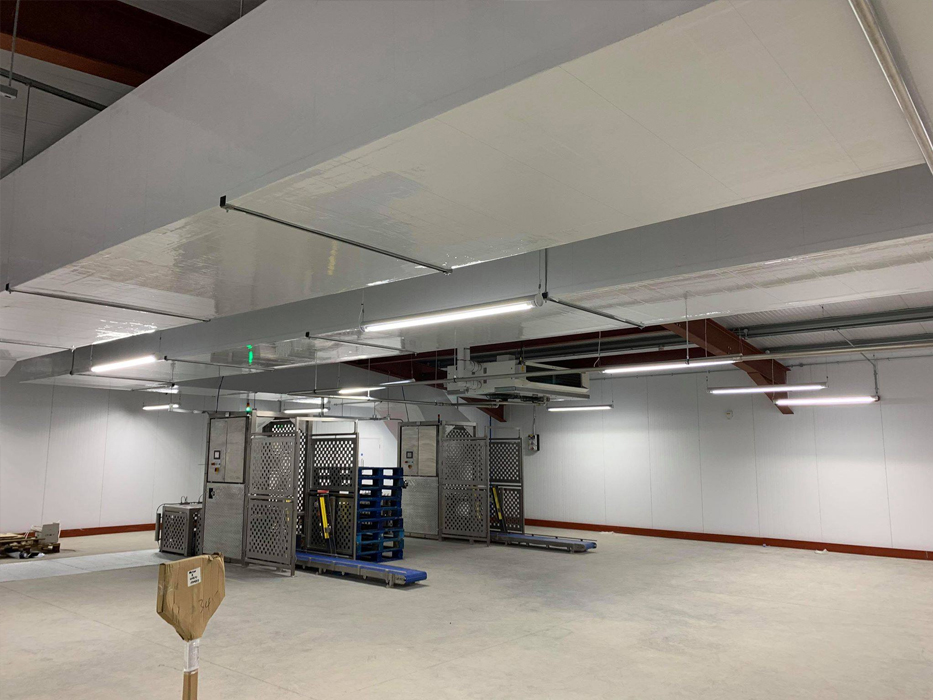
  • Standalone ventilation system, consisting of 2-off Lennox heat pump units / ducted system providing the required heating, cooling and fresh air for a high bay Warehouse.

General plant description

New cooling duty requirements;

Cooling tunnel  1500kw

Despatch area  90kw

Repack area     40kw

The existing ammonia / glycol, chilled water system, comprises of 2-off gravity fed ammonia surge drums, one provides chilled water and the second provides chilled glycol at -7°C. For this project the chilled water system remained as built, and the glycol system was increased in size by a further 1200 kW by fitting to the surge drum, an additional Alfa Laval heat exchanger providing glycol at -7°C/ -3°C. Provision was made for this additional plate to be fitted when the plant was originally designed so all the connections were in place to allow a relatively straightforward installation. Additional valves and safety valves were fitted as required.

Vapour from each of the 2 plate packs on the glycol system is drawn into a common suction header from which the original Grasso RC612E compressors along with a new Inverter driven, GEA Grasso Duo SPD MD 5A screw compressor. The new compressor provides an additional capacity of 1515 kW when operating with a suction pressure at -9°C and condensing at +32°C. Each compressor then discharges into a common discharge header which in turn is condensed in 2-off Baltimore evaporative condensers, the existing is rated at approximately 1900 kW and the new CXVE 539 (supplied and installed) provides 1877 kW when operating at +32°C within a wet bulb ambient of +21°C. There is also an additional glycol cooling circuit fitted to the condenser to provide a capacity of 394 kW of cooling for the new GEA duo compressor pack oil cooling circuit.

The new and existing condensers are piped together to provide condensed ammonia liquid which then flows into a new common high-pressure liquid receiver. Liquid from the new common receiver is fed to the existing chilled water surge drum via a Hansen MVP 32-7 motorised valve, ammonia is also fed to the glycol surge drum via a Hansen MVP 40-7. Both valves are controlled by level transmitters fitted to each surge drum vessel.

The GEA DUO compressor oil cooling is provided via a split cooling circuit in the new evaporative condenser. The circuit operates with a 28% mix of DTX coolflow, the pump provided is a Grundfoss NB40-125-142/ 5.5 kW, the flow rate is 12.73 L/s with a head at 22.5 mtrs, the DTX coolflow operating temperatures are +32°C/ +42°C.

Three Grundfoss NB100-315-334/ 30 kW pumps are provided for the primary DTX coolflow chilled glycol to feed the new PL500 cooling tunnel, Repack area and Despatch area. The pumps are set up to have two running with one standby, each pump provides 54.73 L/s with a head at 35.4 mtrs. The PL500 cooling tunnel is fed with DTX coolflow at -7°C, there are twenty evaporators installed within the tunnel at high level. The Re-pack area has two dual discharge evaporators installed within it for controlling the air temperature at +4°C, each cooler is supplied with DTX coolflow and each has a capacity rated at 20 kW, defrost is off cycle with the cooling closed off and the fans running for a set period of time. The Despatch area has three draw through evaporators installed within it for controlling the air temperature at +4°C, each cooler is supplied with DTX coolflow and each has a capacity rated at 30 kW, defrost is off cycle with the cooling closed off and the fans running for a set period of time.

High Bay Warehouse temperature conditioning system

The system provides an overall temperature throughout the high bay warehouse at 15°C by means of a displacement ventilation system. Conditioned air is discharged along the full length and below the 4 of the bottom tiers of racking and the resultant mixed air allowed to rise via buoyancy to the top of the room where it will be collected via return ducts and drawn back to the two Lennox air handling units. The 2-off Lennox heat pump units provide all required heating, cooling and fresh air for the Warehouse.

Meat Packaging Facility

Meat Packaging Facility

Ammonia / Glycol Heat Pump – Meat packaging facility

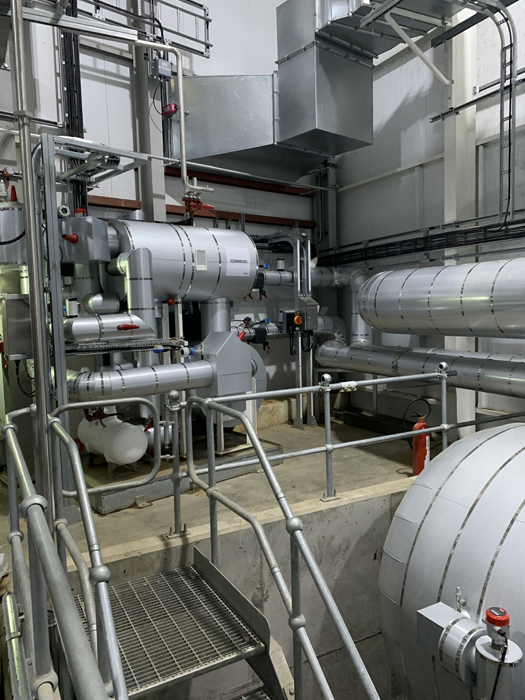
Our client operates a meat packing facility and we were awarded the installation contract in 2014 to install a central ammonia / glycol system. During the summer of 2019 we were then awarded the installation contract to install and fully commission a brand new ammonia / glycol heat pump system, providing cooling for a factory extension, whilst heating 150m3 of mains water up to +65°c for sites wash down periods.

We proposed and installed a Grasso RedAstrum, low charge ammonia, packaged glycol chiller including high pressure screw compressor, equipped with an inverter driven 280kw motor. The pack provides 603kw of heating and 390kw of cooling capacity, supplying mono propylene glycol at -2°c / +2°c return on the cooling circuit. The package came complete with OMNI controller, which is networked back to the main refrigeration plant Trend SCADA system.

The -2°c / +2°c pressurised glycol cooling circuit is fed from a heat exchanger on the RedAstrum package, supplying mono propylene glycol at 25.3 L/s at 2.5 bar head (Run and standby pumps). The cooling circuit is linked to the existing central ammonia plants, high temperature (-2°c / +2°c return)  glycol circuit to provide the heat pump with continuous load when cooling in the new factory extension is either temperature satisfied, or surplus to requirements. The chilled glycol circuit feeds the following main plant items;

  • 2 x 181kw Lennox air handling units providing pressurised fresh air at +10°c for the new factory extension. Each requiring a flow rate of 11.68l/s (Glycol -2°c / +2°c return) Both AHU’s come complete with integral glycol heating coils.
  • 3 off glycol, low velocity, dual discharge evaporators above a mezzanine area providing conditioned air at +18°c.
  • 1 off glycol buffer tank (Pressurised)
  • 1 x temperation loop / pumping station supplying glycol at 5.6L/s onto a plate heat exchanger. The chilled water secondary side of the heat exchanger serves a buffer tank, complete with integral weir plate (Warm / cold sides). Chilled water at +5°c is supplied from three pumps (cold side) each supplying chilled water at 1.24L/s at 5.0 bar head feeding packing machines and Vacuum pumps internally to three locations throughout the facility.

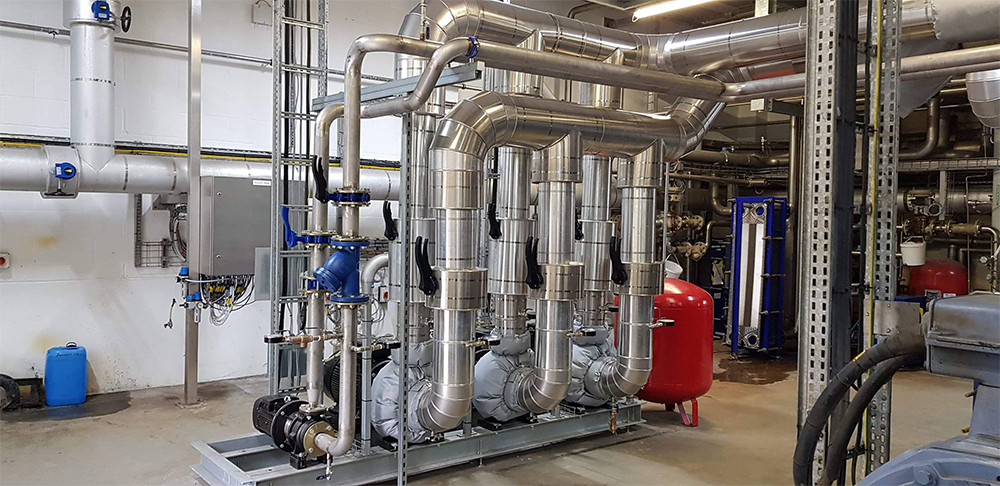
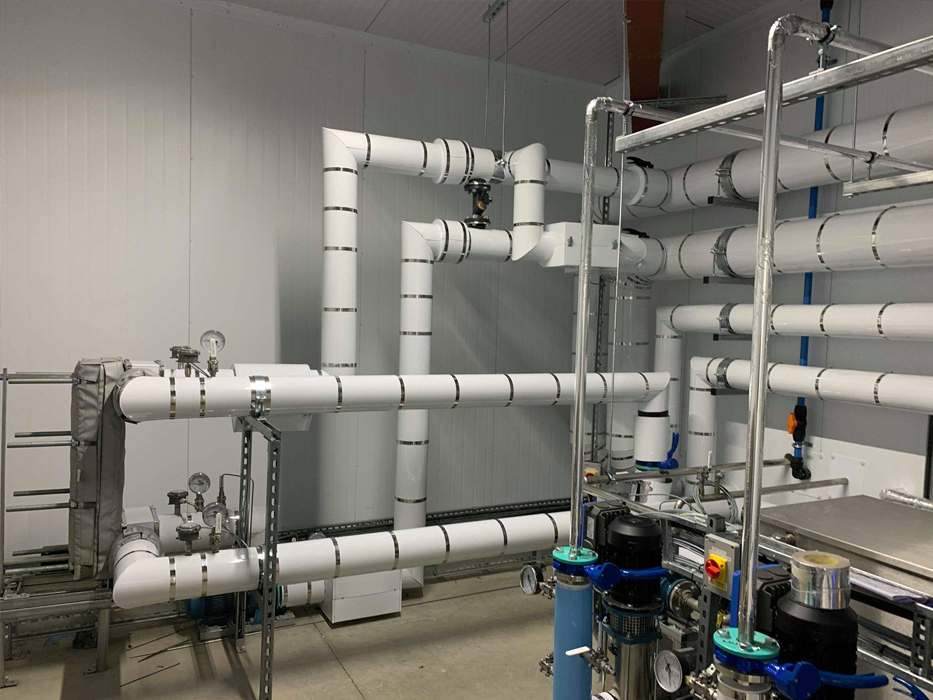
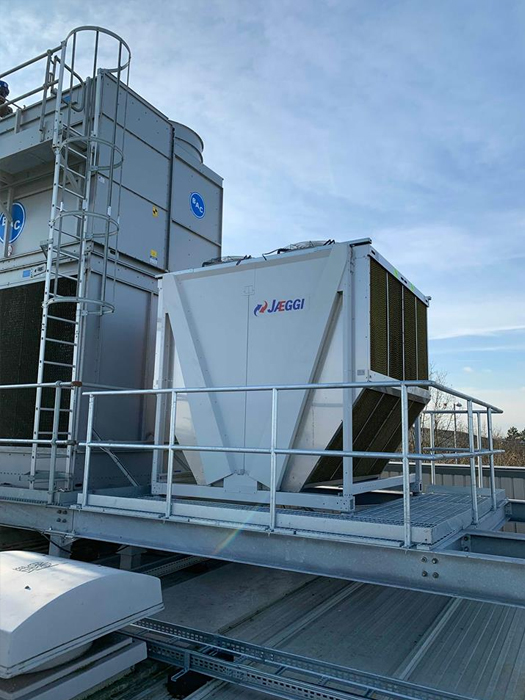
The heating circuit (Heat pump), consists of a pressurised primary glycol circuit, including Run and standby pumps, supplying glycol at +70°c / +40°c return at 5.25L/s, a large buffer vessel, and 1 x plate heat exchanger. If heating on the secondary water side of the circuit is surplus to requirements or temperature satisfied, a three port diverting valve, diverts the hot glycol fluid to a 615kw JAEGGI Hybrid Blue adiabatic cooler to reject the heat.The integral PLC control monitors the fluid outlet temperature and ambient conditions. From the collected information, the optimum combination of water feed rate and fan speed are determined and controlled. The performance is assured by the integral PLC control system and variable speed fans, with each operating point being determined individually with only the necessary amount of pre-cooling water used, thus operating costs are kept to a minimum.

The secondary heating circuit (Mains water) fed from the glycol heat exchanger consists of a large buffer tank providing 150m3 of water at +65°c. The hot water generated from the heat pump provides the factory with heated water for wash down periods. This efficient process not only provides adequate cooling capacity for the new extension, it has provided significant energy savings over our customers conventional boiler system, which is still in situ for standby purposes only.

Another advantage of the system we installed is after the wash down period. Whilst the factory take advantage of the heat generated from the heat pump for their wash down, when this process has been completed the air handling units are programmed to dry out the area. This is achieved via a detailed control strategy, both cooling and heating the space via the AHU’s cooling & heating coils, drying the area out very quickly.

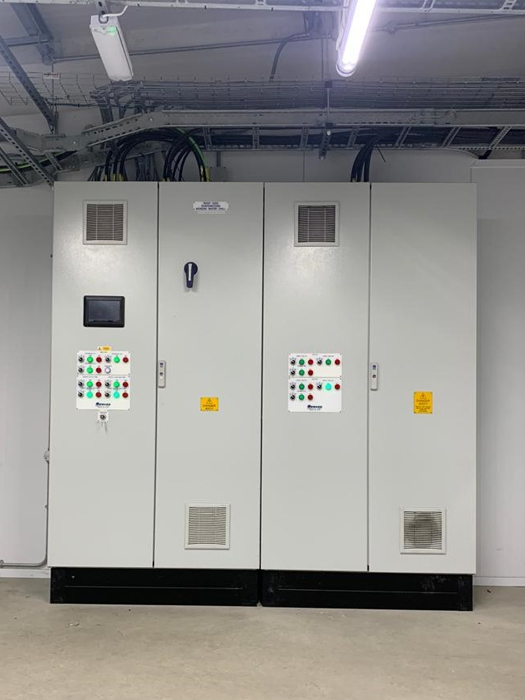
All new control panels were fitted with Trend controllers and HMI screens networked back to the main Trend SCADA system. The system is accessible from our offices for monitoring and fault-finding purposes.

Ammonia / Glycol Heat Pump – Meat packaging facility

Ammonia / Glycol Heat Pump – Meat packaging facility

Our client operates a meat packing facility and we were awarded the installation contract in 2014 to install a central ammonia / glycol system. During the summer of 2019 we were then awarded the installation contract to install and fully commission a brand new ammonia / glycol heat pump system, providing cooling for a factory extension, whilst heating 150m3 of mains water up to +65°c for sites wash down periods.


We proposed and installed a Grasso RedAstrum, low charge ammonia, packaged glycol chiller including high pressure screw compressor, equipped with an inverter driven 280kw motor. The pack provides 603kw of heating and 390kw of cooling capacity, supplying mono propylene glycol at -2°c / +2°c return on the cooling circuit. The package came complete with OMNI controller, which is networked back to the main refrigeration plant Trend SCADA system.


The -2°c / +2°c pressurised glycol cooling circuit is fed from a heat exchanger on the RedAstrum package, supplying mono propylene glycol at 25.3 L/s at 2.5 bar head (Run and standby pumps). The cooling circuit is linked to the existing central ammonia plants, high temperature (-2°c / +2°c return)  glycol circuit to provide the heat pump with continuous load when cooling in the new factory extension is either temperature satisfied, or surplus to requirements. The chilled glycol circuit feeds the following main plant items;
2 x 181kw Lennox air handling units providing pressurised fresh air at +10°c for the new factory extension. Each requiring a flow rate of 11.68l/s (Glycol -2°c / +2°c return) Both AHU’s come complete with integral glycol heating coils.
3 off glycol, low velocity, dual discharge evaporators above a mezzanine area providing conditioned air at +18°c.
1 off glycol buffer tank (Pressurised)
1 x temperation loop / pumping station supplying glycol at 5.6L/s onto a plate heat exchanger. The chilled water secondary side of the heat exchanger serves a buffer tank, complete with integral weir plate (Warm / cold sides). Chilled water at +5°c is supplied from three pumps (cold side) each supplying chilled water at 1.24L/s at 5.0 bar head feeding packing machines and Vacuum pumps internally to three locations throughout the facility.


The heating circuit (Heat pump), consists of a pressurised primary glycol circuit, including Run and standby pumps, supplying glycol at +70°c / +40°c return at 5.25L/s, a large buffer vessel, and 1 x plate heat exchanger. If heating on the secondary water side of the circuit is surplus to requirements or temperature satisfied, a three port diverting valve, diverts the hot glycol fluid to a 615kw JAEGGI Hybrid Blue adiabatic cooler to reject the heat.The integral PLC control monitors the fluid outlet temperature and ambient conditions. From the collected information, the optimum combination of water feed rate and fan speed are determined and controlled. The performance is assured by the integral PLC control system and variable speed fans, with each operating point being determined individually with only the necessary amount of pre-cooling water used, thus operating costs are kept to a minimum.


The secondary heating circuit (Mains water) fed from the glycol heat exchanger consists of a large buffer tank providing 150m3 of water at +65°c. The hot water generated from the heat pump provides the factory with heated water for wash down periods. This efficient process not only provides adequate cooling capacity for the new extension, it has provided significant energy savings over our customers conventional boiler system, which is still in situ for standby purposes only.


Another advantage of the system we installed is after the wash down period. Whilst the factory take advantage of the heat generated from the heat pump for their wash down, when this process has been completed the air handling units are programmed to dry out the area. This is achieved via a detailed control strategy, both cooling and heating the space via the AHU’s cooling & heating coils, drying the area out very quickly.


All new control panels were fitted with Trend controllers and HMI screens networked back to the main Trend SCADA system. The system is accessible from our offices for monitoring and fault-finding purposes.

2500kw Ammonia / Glycol plant

2500kw Ammonia / Glycol plant

2500kw Ammonia / Glycol plant

Our client made the decision to replace their central ammonia system in 2017 and Seward Refrigeration Ltd were invited to present our company and were interviewed by sites project management team. Seward Refrigeration were successful and made the tender list for the new installation project, taking our design and sales team approximately 4 months to complete a number of variations and options in line with the tender specification document.

Seward Refrigeration were then selected as the chosen refrigeration contractor for the new installation project, following a further two months of variations and options. Due to our clients budget, many plant items were removed from the original scope of works, including standby HT compressors, automatic ammonia purging system, additional low temperature glycol circuit and additional evaporative condenser to name a few.

Reducing energy consumption is always our primary objective, and our first choice will always be natural refrigerants for any new installation project. Using Ammonia as the primary refrigerant for a project of this stature was always going to be our first choice. Ammonia has no effect on global warming, is efficient, cost effective and green, a perfect option as we move forward into the future.

The refrigeration system we proposed and installed was a 2500kw two stage ammonia / glycol system (Coolflow DTX), which would be installed over two phases. The low stage feeds direct pumped ammonia to a cold store, with the high stage feeding a gravity fed intercooler vessel / plate heat exchangers, evaporating at -16.5ºc, supplying glycol at -15ºc.

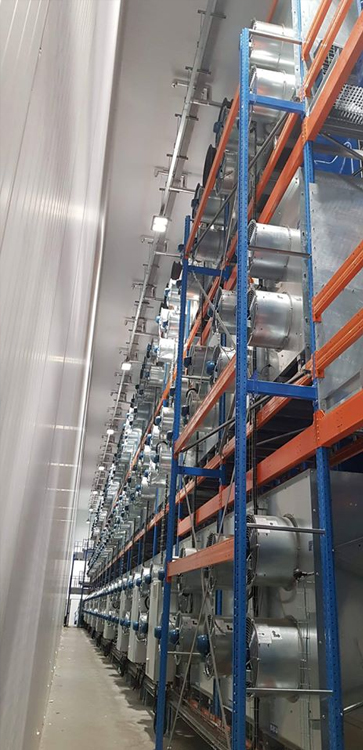
The low stage plant consists of two inverter driven Grasso V300 reciprocating compressors (Run and standby) and LT pumped surge vessel (Run and standby pumps), feeding two ceiling mounted draw through evaporators in a cold store, operating at -20 degrees c. The high stage plant consists of two inverter driven, Grasso SP1 screw compressors, a gravity fed intercooler vessel complete with 3 x plate heat exchangers, 1 x evaporative condenser, HP float and 3 x inverter driven KSB glycol pumps (2 x run, 1 x standby). The cold glycol circuit feeds two AHU’s, evaporators in holding chill & production areas, a large despatch chill, all operating between +2/+5 degrees c, including blast chillers. In total there were 45 evaporators installed and all manufactured by Coolers & Condensers. All coolers feeding chilled areas were installed with EC fans, providing energy savings during low load conditions.  

To reject the total THR of the compressors, we installed a BAC evaporative condenser, condensing at +32 degrees c / +21.5 degrees c wet bulb. The condenser was  equipped with fan speed inverters, wet bulb sensor and electronic control system that automatically floats the discharge pressure dependant on the ambient wet bulb temperature and discharge pressure. This technique ensures that the HT compressors in operation will absorb the minimum amount of power throughout the fluctuating range of the discharge pressure. The condenser was coated with a Baltibond hybrid coating for protection against a harsh costal environment, and fitted with an access ladder and walkway to facilitate access to the eliminators and spray nozzles for cleaning. Motor davits were also installed for the ease of removing fan motors, if required in the future. The condenser also came equipped with a split cooling circuit for compressor oil cooling via an independent glycol circuit.

The defrosting method for all glycol coolers is achieved via a warm glycol ring main, consisting of two inverter driven, suction flooded KSB glycol pumps, (Run and standby) reclaiming free heat from a discharge line partial desuperheater / condenser. The warm glycol circuit is controlled at a setpoint of +20 degrees c via a modulating three port valve, providing a very efficient defrosting process. Both cold store evaporators are defrosted via hot gas supplied by the main discharge line fed from the two HT screw compressors.

The refrigeration duty for the 1st phase totals 1700kw, with a further 800kw accounted for in the design to cater for future cooling capacity. To provide the future cooling duty, an additional HT screw compressor, evaporative condenser, HP float and cold glycol pump will be required, taking the total plant duty to 2500kw.

The four Grasso compressors are all controlled via independent OMNI controllers, controlled in sequence, and all parameters are networked to the main system PLC, providing historical data and graphs for monitoring purposes. To control and monitor the plant we installed an RDM PLC, complete with Data manager. All roof void control panels, controlling the glycol evaporators each have independent HMI screens and all RDM TDB controllers are networked back to the central RDM Data manger in the switch room. An RDM 3G modem was installed allowing our staff to monitor the system remotely if required and from our offices we can check set points, reset alarms and determine if a service call is required.

We installed a TQ leak detection system for the plant room and Coldstore, four ATEX rated extract fans, each inverter controlled, and extract hoods above each cold store ammonia valve station. A ventilation system supplies ambient fresh air in the plant room and a pressurised ventilation system / split air conditioning system was installed for the switch room.

To conclude, there was over 4500 meters of pipework installed and the installation project took 14 months to complete. Each evaporator fed from the pumped ammonia / glycol circuits was introduced to the system one by one, whilst working around sites live production facility. Seward Refrigeration offered our client the best compromise, between capital investment, running costs, maintenance and environmental impact with the new low charge ammonia / secondary glycol system. Our customer was pleased to have their existing, high charged ammonia plant finally replaced. Not only has the new system provided our client with peace of mind, they’re delighted with the performance, in particular with the blast chills achieving ideal core temperatures in 2-3 hrs (dependant on product type), surpassing the performance of the existing blast chillers.

Ammonia/Glycol plant – Factory Extension

Ammonia/Glycol plant – Factory Extension

Ammonia/Glycol plant – Factory Extension

Seward Refrigeration Ltd were awarded the installation contract, to supply, install and commission a brand new ammonia/glycol system for a factory extension in the Midlands. The plant provides 690kw providing glycol at -10°c/-5°c feeding evaporators in a large blast chiller, despatch area, chill area, chill stores and two air handling units in high care/low care areas. Evaporator defrosting is achieved via a warm glycol circuit, recovering free heat from a Vahterus desuperheater installed on the discharge line of the Sabroe twin pac.

Installed was an ammonia/glycol, Sabroe twin pac, comprising of 2 x Inverter driven SMC 108LV reciprocating compressors. The pack provides a duty of 670kw, glycol off -10°c, glycol on -5°c, condensing @ +32°c / +21°c wet bulb. To reject the compressor(s) THR we installed a Baltimore VXC condenser, including inverter driven fan motor, controlled on discharge pressure.

The plant is controlled by an RDM plc, including 3G modem allowing our engineers and staff to dial in remotely if any fault alarms are raised. All compressor motors, blast chill evaporator fans and condenser fan are driven by Danfoss FC103 Inverter drives reducing power consumption during low load conditions. The control strategy for the system was designed and programmed in house.

Ammonia plant – Canada

Ammonia plant – Canada

Ammonia plant – Canada

Seward Refrigeration Ltd designed, project managed and commissioned, the installation of a new pumped ammonia plant feeding a spiral freezer and transfer tunnel for a blue chip food processing manufacturer in Canada.

The spiral freezer is designed to freeze five metric tonnes of product per hour, with the product entering the spiral freezer at +90°C and is frozen down to -18°C. The spiral freezer is designed to operate continuously for a 21 day period and to achieve this there are five sequential defrosting ammonia evaporators each with a duty of 418 kW, operating with pumped ammonia at -32°C. Four of the coils are continually in use with the fifth coil defrosting with hot gas.

A split surge drum will provide -32/-5°C ammonia. Connected to the -32°C dry suction line, are two Mycom open flash economised screw compressors each operating at 3600 RPM and directly driven by 530 kW, 4100 volt high-efficiency inverter operated motors. The -5°C surge drum section offers liquid sub cooling and connection onto the new retrograde product drier and 0°C transfer tunnel. The compressor on this section is A Mycom screw compressor operating at 3600 RPM and directly driven by a 350 kW, 4100 volt high-efficiency inverter operated motor.

A high-efficiency condenser suitable for operation in the extreme winter conditions of Canada has been installed with a remote sump and condenser pump fitted within the compressor plantroom.

Poultry Factory – New Ammonia plant

Poultry Factory – New Ammonia plant

Poultry Factory – New Ammonia plant

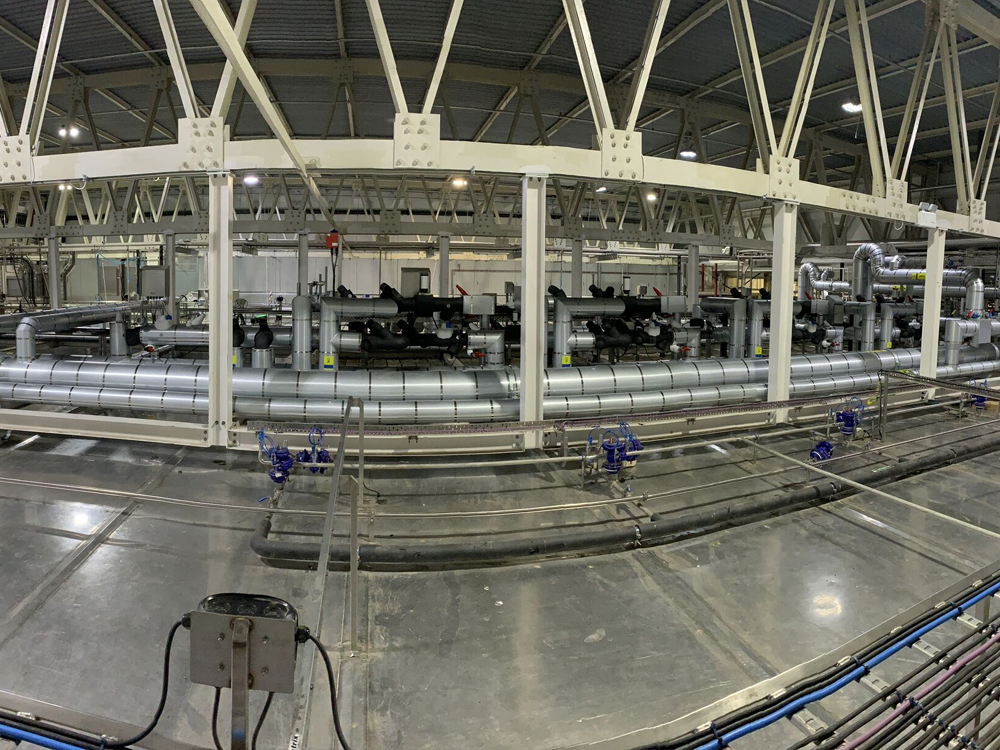
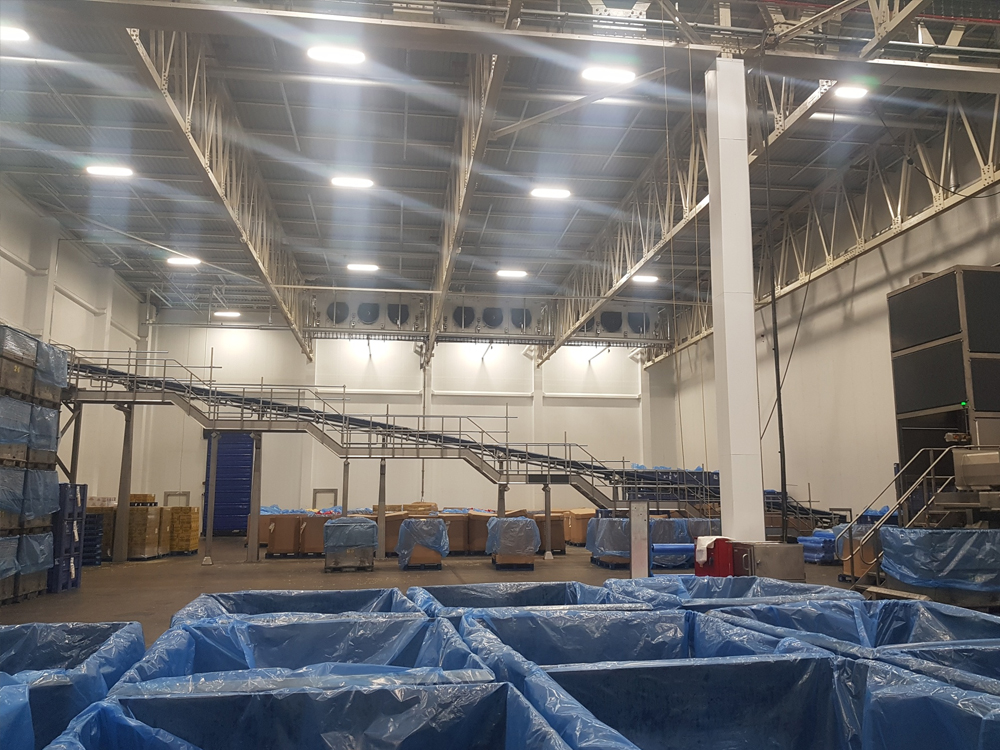
A UK based company specialising in the production, processing, and supply of chilled poultry products awarded Seward Refrigeration Ltd the installation contract to install a new 2400kw Ammonia/glycol system. The new plant feeds an inline blast chiller, production and despatch areas, including standby capacity for future expansion on the secondary glycol side.

The plant consists of 3 x Inverter driven Grasso V1400 reciprocating compressors, each equipped with 250 kW drive motors,  sequence control, floating head pressure control,  surge vessel/pumping station, Alfa Laval pumped ammonia/glycol plate heat exchanger, 30 x evaporators, electrical control panels and 1 x Inverter driven BAC evaporative condenser. Connections have been installed on the discharge line before the condenser to incorporate a future desuperheater via monopropylene glycol and additional plate heat exchanger to raise the temperature of process water.

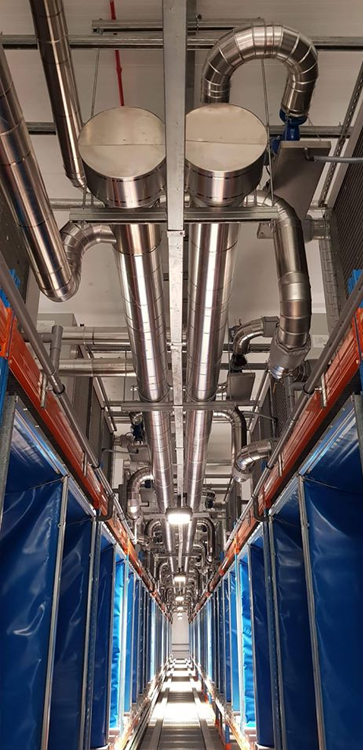
12,000 birds per hour enter the inline blast chiller, sizes ranging from small, medium and large, with one million birds being processed per week. In total, twenty four evaporators sit directly on to the inline blast chill conveyor system support frame. The evaporators were specifically designed for the process, including fans pitched at 45 degrees and air intake hoods for improved air flow and defrosting (Hot gas). All evaporator fans are inverter controlled and the suction pressure is closely controlled, ensuring optimum product outlet temperatures and minimal product weight loss.

The Despatch area evaporators are fed from the pumped ammonia system, with all production area coolers being fed from the secondary glycol ring main. The plant room provided was tight and not ideal, however all plant working to design with future service and maintenance taken into consideration.

The plant is controlled and monitored by an RDM PLC, complete with 3G modem facility allowing Seward Refrigeration to monitor and control the plant from our offices as requested by the client. Any potential alarms are raised by email and text message informing our service department and sites engineering team.

Ammonia Spiral freezer/Chilled water system

Ammonia Spiral freezer/Chilled water system

Ammonia Spiral freezer/Chilled water system

Seward Refrigeration were awarded the installation contract from a major Ice cream manufacturer to supply, install and commission a pumped Ammonia refrigeration system feeding a, spiral freezer and Individual ice cream freezers. The total plant duty is 800kw, pump ratio 4:1, evaporating -39°C, condensing+32°C. The system feeds a 400kw spiral freezer and ice cream freezers totalling 400kw.

Installed were 3 No Mycom N220JL – HE screw compressors (Run & standby), complete with 250KW ABB IP54 low harmonic inverter drives. Cooling duty for each compressor is 403KW, Speed 3600 RPM, Economised, SST -39°C, CT +32°C. To take care of the THR, 1 No Evapco evaporative condenser was installed. CT + 32°C, WB +21°C.

400 kW Hot Water reclaim system

A further condenser manufactured by Vahterus was installed to the system to provide 400 kW of water heating from the refrigeration system when the plant is in operation. A Monopropylene glycol mix is pumped through the condenser at a flow rate of 17.0 L/s, the design on & off temperatures are +26°C & +32°C. The glycol runs through a secondary plate suitable for heating potable water, this plate is sized for 400 kW with a flow rate of 16 L/s, on & off water temperatures are +24°C & +30°C.

600kW chilled water system

We also supplied a new 600 kW ammonia cooled chilled water system which was connected to the above central plant to provide process water to heat exchangers within the factory area, the plant specification was as follows:

One off reciprocating compressor unit model SMC108LV direct driven, complete with 140kW IP23 VSD motor. The motor speed is varied between 500 rpm and 1800 rpm depending on the load generated by the factory process. The Sabroe compressor was connected to a Vahterus 600 kW plate heat exchanger, the plate was flooded and came from Vahterus with a surge drum/ liquid separator, and ammonia level control is provided by a Danfoss AKS 4100 and drives a motorised valve which is built into a Danfoss ICF control valve module.

The compressor evaporating temperature is 0°C and is accurately controlled by regulating the compressor speed and offloading cylinders as required, the condensing temperature is +32°C. A 9m³ insulated water buffer tank complete with weir plate was supplied to provide for any peak loads originating from the factory processes.

Deep chilled storage area (Propane chillers)

Deep chilled storage area (Propane chillers)

Deep chilled storage area (Propane chillers)

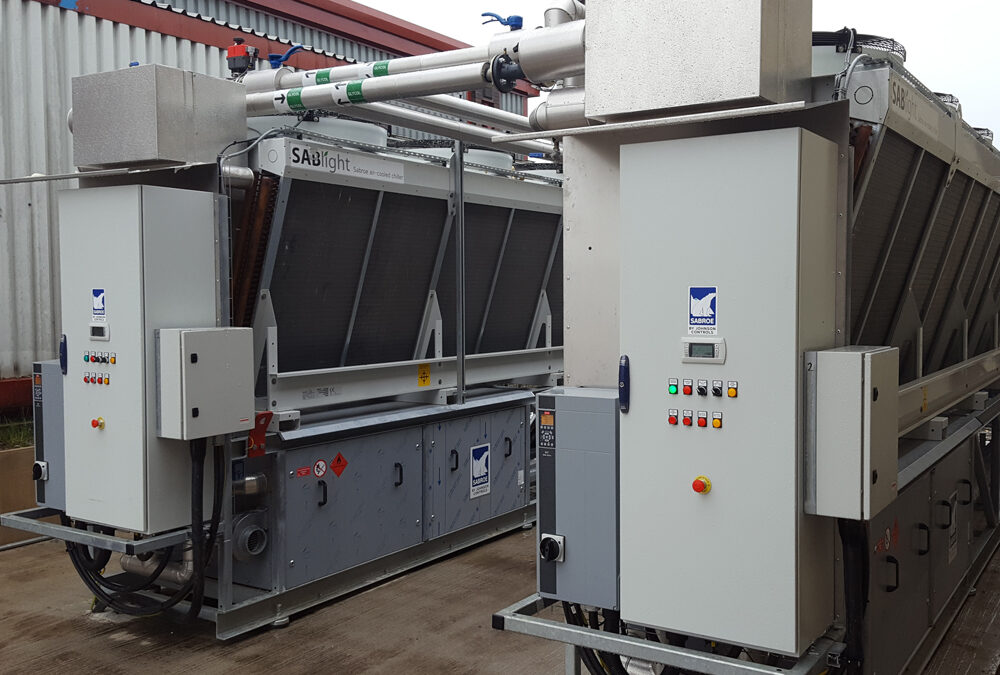
Seward Refrigeration were awarded the installation contract to supply, install and commission a 275kw glycol system for a deep chilled storage area operating at -5°C (New factory extension). Installed were two SABLight A260-1 packaged propane chillers manufactured by Sabroe, each chiller has a capacity of 150.8 kW supplying 40% Monopropylene glycol to 5 off ceiling mounted evaporators.

Sabroe SABLight chiller

Model

SABLight A260-1

Cooling capacity

150.8kw each

Full load shaft power

62kw

Primary Refrigerant

R290

Process medium

40% Monopropylene glycol

Medium inlet

-7°c

Medium outlet

-12°c

The chillers utilise a direct expansion R290 circuit, incorporating the latest high efficiency plate heat exchanger technology. The units each have a single variable speed, semi-hermetic screw compressor and come complete with air cooled condenser that is fitted with efficient variable speed EC fans. Furthermore, efficiency is assured with floating head pressure permitting a minimum pressure of 25°C.
The Sabroe SABLight units operate with a low refrigerant charge complete with:

  • VSD drive on compressor
  • VSD drive on all fans (condenser)
  • Gas detector kit built into unit, including standard ventilator

There are run & standby secondary glycol pumps (Cooling/ heating) all inverter driven for maximum efficiency feeding five ceiling mounted evaporators. Each cooler provides 55kw of cooling duty, supplying a room temperature of -5°C. Evaporator defrost is achieved by warm glycol coil and tray via a warm glycol ring main operating at +20°C. All evaporators are complete with EC fans, speed controllable, providing energy savings (minimum power consumption) and better efficiency over standard Axial fans

All plant is RDM controlled with 3G modem for monitoring purposes from our offices.

New Factory extension

New Factory extension

New Factory extension

Seward Refrigeration Ltd were awarded the installation contract to supply, install and fully commission a brand new 150kw direct expansion refrigeration system for a new factory extension. The system supplies refrigeration to a number of areas including a dispatch deep chill operating at -2°c, Allergen chill operating at +2°c and loading dock operating at +2°c.
Seward Refrigeration upgraded the sites existing Parasense gas leak detection system to cater for the new evaporators / valve stations and condensing unit and the facilities existing Trend temperature monitoring system was upgraded to monitor temperatures for all new areas.

Beef Carcass chilling

Beef Carcass chilling

Beef Carcass chilling

A multinational food company specialising in the production of beef products awarded Seward Refrigeration Ltd a prestigious project to upgrade their existing NH3 plant to cater for an increase in beef production to hold in excess of 700 cattle, with energy efficiency and minimal product weight loss at the forefront of the project.

The additional plant consisted of an inverter driven Grasso reciprocating compressor, packaged surge vessel, replacement evaporative condenser to take care of the THR of the new and existing compressors, control panels and numerous evaporators/controls for the following areas:

Area 1
Area 2
Area 3
Area 4
Area 5
Area 6
Area 9
Total Load

Beef Chill N°4  

Beef Chill N°5 

Hot corridor/Weekend chill  

Beef Chill N°6  

Tripe Chill  

Tripe Packing  

Chilled red offal  

216kW

136kW

272kW

216kW

25kW

17kW

40kW

922kW


A new discharge line de-superheater was installed for the two existing screw compressors and one new Grasso V1100 compressor, providing 405kw of heat during full load conditions raising the water temperature from +25°C up to +35°C for the warm water processes on site.

The new beef chilling evaporators installed were specifically designed for the process and through complex evaporator control via a detailed control strategy Seward Refrigeration Ltd have ensured a minimal product weight loss at less than 1.5%.

ABB – Pooles Pies

ABB – Pooles Pies

ABB – Pooles Pies

Poole’s Pies of Wigan saves £6,000 per annum

Poole’s Pies of Wigan makes up to 200,000 meat pies per day, as well as 80,000 other puff pastries. Like most food manufacturers, refrigeration and freezing systems can account for as much as 80 percent of the company’s energy bill.

So when Poole wanted to cut costs, it focused on potential efficiencies in refrigeration. Poole’s Pies anticipates an 11 percent cut in the cost of electricity consumption following the installation of the drives.The company’s new spiral belt freezer increases freezer storage capacity, while the refrigeration system needs less power now thanks to ABB low voltage AC drives controlling two fundamental components, the compressor motor and condenser fan.

Most electric motors operate at full speed unless they are regulated. This is often done by means of a throttle, which is like driving a car with one foot on the accelerator and the other on the brake.

Variable speed drives are a much more precise means of controlling the speed and power intake of electric motors. ABB drives in a new refrigeration system have achieved energy savings of 11 percent in the compressor motor and 20- to 30-percent in the fan. This is expected to save the company more than £6,000 per year. For Poole’s Pies, replacing the 315 kW screw compressor’s slide valve control with ABB’s low harmonic ACS800 drive delivers power savings of 11 percent. The compressor motor now operates efficiently at lower speeds between 1500 and 3600 rpm.

Moreover, ABB’s 15 kW standard drive, ACS550, now controls the fan that forces cooling air over the condenser, yielding a 3-percent decrease in energy consumption for every 1-percent drop in speed. The result is the fan uses from 20- to 30-percent less power than it did before the conversion.

A compact spiral belt freezer maximizes surface area of a given floor space with spiraling tiers of shelves. Although the full load efficiency of screw compressors is generally good, part load performance can be poor, says Brian Seward, spokesperson for installer, Seward Refrigeration. “With variable speed control of the compressor at Poole’s Pies, we now have the best of both worlds, good efficiency at both partial load and full load.” Refrigeration systems decrease temperature by removing heat rather than by adding cold. To circulate cold liquid refrigerant and absorb heat from the space to be cooled, mechanical vapor-compression refrigeration systems rely on key pieces of hardware, such as compressors and fans, to move pressurized refrigerant.